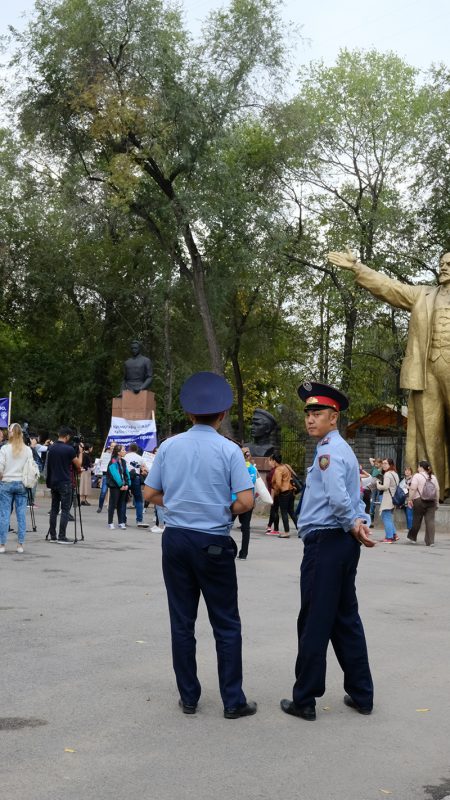
The use of ‘sanctioned’ and ‘protest’ in one context could be absurd if it is not normal. Article 20.1. of the Constitution of the Republic of Kazakhstan states that “Freedom of speech and creative activities shall be guaranteed. Censorship shall be prohibited.” However, the Law of the Republic of Kazakhstan N 2126 circumstances that “any form of protest, picket, demonstration or march that expresses social, group or individual opinion must get permission from the government 10 days prior of the act if it wants to be legal.” By September 28th, 2019, only 3 protests were legalized and got a status of ‘sanctioned’ in the history of independent Kazakhstan. All of them happening within the last 3 months. With this short essay, I want to put forward the idea that what is claimed as an act of political emancipation, in this case, is its failed rehearsal. I respectively use works of Étienne Balibar and Augusto Boal to address this riddle.
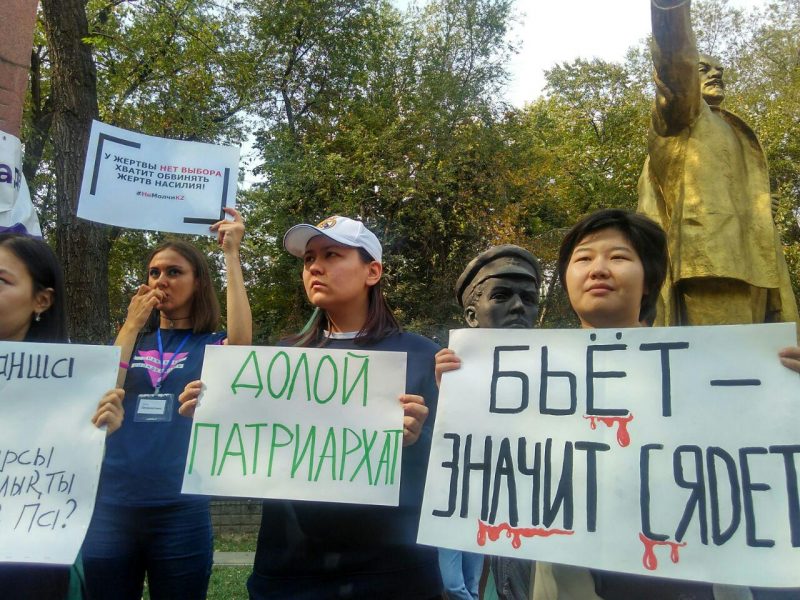
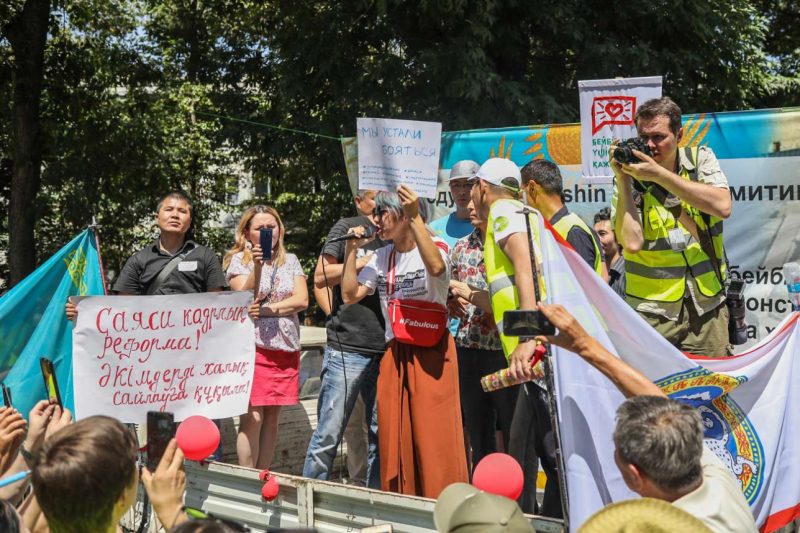
Balibar introduces the history of emancipation as “not so much the history of the demanding of unknown rights as of the real struggle to enjoy rights which have already been declared.” Ironically, the first two sanctioned (after 36 declines) protests were in support of ‘peaceful gatherings’. The demand was to be able to express the protest. In terms of Balibar, it might come under the category of pre-history of emancipation or another restriction of his model. This case further expands the problem of “equal emancipation” as it is the majority of “us” protesting for autonomy from the minority of “them”. Therefore, the autonomy of these protests become bigger than politics because ‘part’ of society “excluded – legally or not – from the universal right to politics” is the whole society. So under limited Balibar’s model, the sanctioned protests failed to be acts of political emancipation.
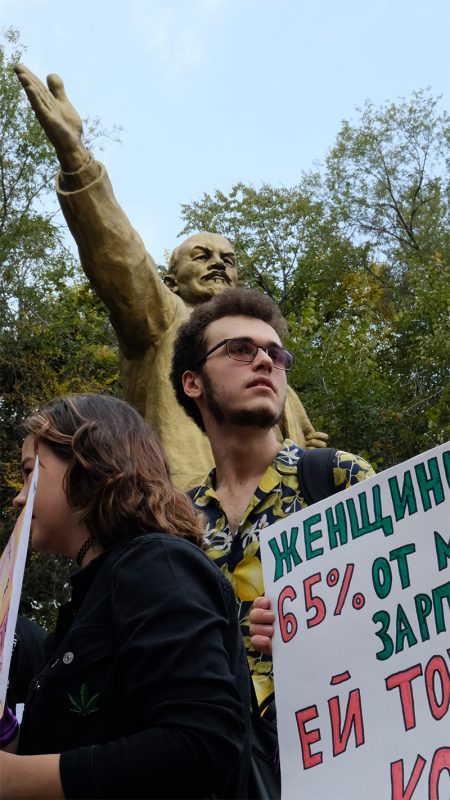
Sanctioned protest for equal rights. Sept 28th, 2019. Almaty, Kazakhstan. Photo by Damira Mukitanova. https://www.the-village.kz/village/city/picture-story/7645-fotoreportazh
If its not an act itself, then can it be a rehearsal? In terms of Boal’s “theater of the oppressed”, these protests could go into the category of forum theater as the participants “intervene decisively in the dramatic action and change it.” Some people led the action by submitting application for protest and getting it, while others supported by coming to it and being active participants with placards and statements. Still the rehearsal was failed because oppressed people are trying to liberate themselves within the ‘given’ theatre. It is the government that allowed a specific ‘stage’ where spectators could imitate acting. And by specific place, I mean the square behind the cinema theatre Saryarka with a golden monument of Lenin reminding participants how a communistic dream in this country covered years of external colonization and how a democracy is under an internal one now.