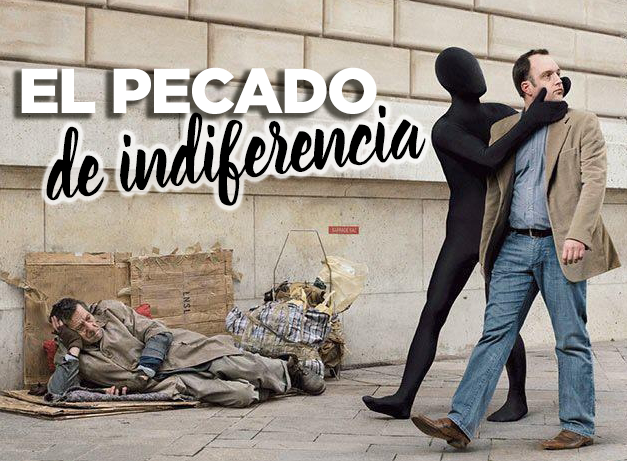
diagonal looks

I wanted to see how the readings of this week address the gaze of the victim and wondered- Does the victim ever get to look back? This question became important to me, as in my own research I am interested in the representation of femininity (through the figure of the Madonna specifically in the middle-age, and beginning of renaissance), especially in how male painters saw the ideal of a woman and represented it. I am therefore focusing on their bodies that are curved, twisted, forming diagonals. Their eyes are diagonal- down, in a form of submission, or on the contrary up to the sky begging for guidance. But almost never frontal- directly looking at us.

In her text Percepticide, Diana Taylor writes on page 128: “Sight is gendered or, perhaps more accurately, visual access is gendered. As in rituals, only the initiates have the right to see the hidden source of power. And in the all-male theatre of the Argentine horror show, women are not the see-ers but the objects to be seen.” On page 120 you see the Photo by Jorge Aguirre where an image of “a beautiful model” is to be seen- the model not looking directly at us, but down, into the emptiness. “The beautiful model is the object of the girl’s look, but of course she doesn’t return the look.” (p.121)

When wondering why the play of Griselda Gambaro, Information for Foreigners is so threatening, even though no actual violence is being shown, Taylor writes: “(…)because the victim looks back at us, returns and challenges our gaze-just as the victims who were abducted, yelling and screaming, during the Dirty War. ” (p.133) (…) We are in the same room. This naked body does not, as in cinema, exist in the realm of the imaginary, pure celluloid; it is materially present. The victim returns our look.” (p.135) As a spectator,  it is definitely easier to distance oneself through the lack of being directly looked at.

Foucault mentions that during the spectacle of the scaffold, the head of the assasin will be covered with a black veil and quotes De Molène on page 13/14: “(…) the condemned man was no longer to be seen. Only the reading of the sentence on the scaffold announced the crime and that crime must be faceless. (The more monstrous a criminal was, the more he must be deprived of light: he must not see, or be seen.

The eyes of women in most painting and photographs are shown, the difference is that they are never allowed a powerful frontal look and posture (linking desire to a visual lack?) This lets the spectator not only own them (as John Berger in Ways of Seeing mentions the Spectator-Owner), but I almost dare to see it as a torture- the fact that the victim is not allowed to look at us.
See-Saw

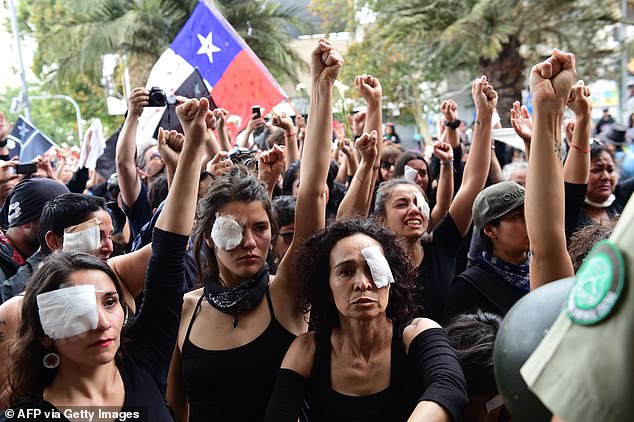
This is the second time that the work of Alfredo Jaar is addressed in one of our readings. And right in a moment when Chile, his home country, is staging a complex political spectacle: on one side, more than one million of people are taking the streets to protest against inequality, on the other side, President Sebastian Pinera’s violent repression of the protests, using the military apparatus to contain the civil unrest by shooting protesters in the eye. How we choose to frame these events, or how they appear to us in the media are part of, as Jacques Rancière suggests, a “sensible system” (100) that operates “from the kind of consumption of the image that makes images out of atrocity without inducing a political response”. For Rancière, what makes an image intolerable is also a recognition of humanity. He writes:

“If horror is banalized, it is not because we see too many images of it. We do not see too many suffering bodies on the screen. But we do see too many nameless bodies, too many bodies incapable of returning the gaze that we direct at them, too many bodies that are an object of speech without themselves having a chance to speak. The system of information does not operate through an excess of images, but by selecting the speaking and seasoning beings who are capable of ‘deciphering’ the flow of information about anonymous multitudes” (96)

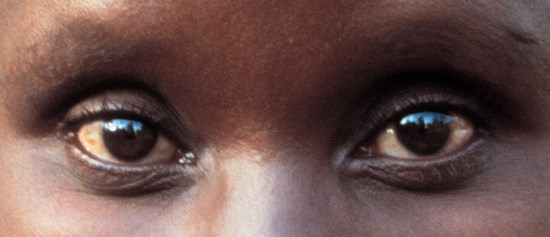
Analyzing Jaar’s installation “The eyes of Gutete Emerita”, Rancière calls attention to the inversion of the gaze, from the horrible events carried out by the Hutu militias, armed and trained by Rwanda military, to the forced witnessing of the eyes upon these horrendous acts. For Rancière, “The true witness is one who does not want to witness” (91). Jaar’s work then overturns “the dominant logic that makes the visual the lot of multitudes and the verbal the privilege of the few” (97). The spectator first has to read about Emerita’s experience of the Rwanda genocide and only after this “knowledge” can they have access to Emerita’s concentrated stare, “in whose eyes we can detect the horror they have seen” (93).

jaar-12x

Opposed to the “spectacle of horror”, Gutete Emerita’s framed gaze “disrupts the counting of the individual and the multiple.” (99) Rwanda genocide is turned from a massacre of “nameless beings without an individual history” to a sensible experience that redistributes the visible. As Rancière proposes: “The images of art do not supply weapons for battles. They help sketch new configurations of what can be seen, what can be said and what can be thought and, consequently, a new landscape of the possible. But they do so on condition that their meaning or effect is not anticipated” (103)

Against the terrifying normalization of mass productions, Jaar’s intervention speaks directly to the problem of human disposability in a way that disrupts aesthetic regimes of mediated suffering. Through that disruption, the artist renders visible the fundamental categories of the political that makes necessary the reflection upon the intolerable reality.

Perceiving Punishment

Michele Foucault was well on his way to the formation of his theory of biopower in the historical layout of public execution in Discipline and Punish. His move from execution as a public spectacle to, “punishment, then will tend to become the most hidden part of the penal process,” is reflected in his theory of biopower much later as the shift from the almighty monarchical sovereign to the nation-state sovereign (Foucault, 9). From this we can draw that the state’s power, as it relates to punishment, is much more limitless; before, when the sovereign could “let live and make die,” the power ended when the sovereign made die, however the state shifts to a “make live and let die” power dynamic that extends the state’s power to have a psychological hold over the public in a regulatory fashion through the “invisibility” of punishment. It is still happening; we just don’t see it. Or rather, we now choose not to see it. 

            Diana Taylor states (within the context of Argentina) in Percepticide that “Signs indicated what the population was to see and not to see,” creating a clear delineation between the public and private sphere, and that which is private is also incredibly dangerous and violent (Taylor, 119). “Spectacles of violence rendered the population silent, deaf, and blind…To see without being able to do disempowers absolutely. But seeing without the possibility of admitting that one is seeing further turns the violence on oneself. Percepticide blinds, maims, kills through the senses” (Taylor 123-124). The public exaction of biopower from the days of old enacts a sort of transference to become an invisible and powerful monster, exacting itself now on the population where “if you see something, say something,” is a trap. If we say something, it becomes real. And if it becomes real, we will have to continue to do something about it. 

            I believe that Percepticide manifests itself differently depending on the particular political arena. Perhaps this idea of “not seeing,” can be looked at in a perspective way through Rene Girard’s concept of the scapegoat mechanism. Girard looks at persecutions which are, “acts of violence, such as witch-hunts, that are legal in form but simulated by the extremes of public opinion” (Girard 12). He traces the genealogy of the scapegoat through the context of religion and animals – using the example of the sacrifice. Sacrificial “victims” – which, in this framework are not necessarily victims – are meant to end the cycle of violence in a crisis. They are sacrificed without the fear of reciprocity. This particular intensity of public opinion to create the scapegoat which ends in collective forms of violence is contingent upon the similarly violent delineation between public and private spheres through the enaction of biopower, of seeing and not-seeing, and through the (hidden) spectacle of the state. In this case – I’m left with the question of narrative and language. If punishment is “hidden,” if the power of the state is left to live on through the invisible threat of punishment and torture, if the sacrificial scapegoat must be created to avoid further crisis – what type of narrative is required to sustain this? And, is there a narrative – is there language – sufficient enough to undo this mechanism once it is mobilized? 

The political uses of pain

In her account of the distinction between public and private, Hannah Arendt claims that “the experience of great bodily pain is at the same time the most private and least communicable of all” (50). For her, the site of the body is firmly situated within the private as its experiences cannot be transferred or shared. Pain, in particular, prevents the victim for speaking or acting, removing an individual’s potential from participating in the public realm. The readings assigned for this week develop a very different account of pain and torture. Both Foucault and Taylor consider the nuanced ways in which violence, pain and visibility can interact to sustain political regimes and to produce a particular sense of terror or control among its subjects.

In her chapter “Percepticide”, Diana Taylor advances the idea that torture carries a distinct intention, not merely for the victim, but for the spectator. While Taylor makes reference to make performances, plays and images throughout, the text is primarily structured around an analysis of Griselda Gambaro’s 1973 play Information for Foreigners. This allows for the author to draw parallels between theatre’s conventions and its demand of the gaze with the particular ways in which terror and torture operated in Argentina in the 1970s. The way the audience followed the guide through graphic and violent performances in Gambaro’s play is also the complicit way in which the Argentinian people lived through a regime of terror. In the same way as the victim of torture is rendered powerless, so is the spectator. In Discipline and Punish, Michel Foucault sets up the body as a concrete site for the exertion of power. For him, the body is “directly involved in the political field; power relations have an intimate hold upon it; they invest it, mark it, train it, torture it, force it to carry out tasks, to perform ceremonies, to emit signs” (25). Foucault develops a genealogy of practices of punishment to ultimately present the mechanics of power as operating within a ‘political economy’ or ‘political technology’ of the body.

Despite dealing with similar themes, the two texts diverge in several significant ways. I am interested in particular in the ways in which they might account for a critical position or some kind of resistance to the exertion of power through direct corporal violence. While Foucault’s account seems to exclude any exteriority to the discursive constructions of the body through punishment, by centering her analysis on the analysis of a particular theatre piece, Taylor might point us towards a potential site of critique and struggle.  

Although these two texts operate very differently, I was struck by the account of invisibility and secrecy that each presents as a necessary complement to the hypervisible spectacles of violence. The parallel between the terror of a violent regime (especially one characterized by regular disappearances) and theatre is also significant in this respect. Taylor tells us that “dealing in disappearance and making the visible invisible are also profoundly theatrical. Only in the theatre can the audience believe that those who walk offstage have vanished into limbo” (132). Foucault, on the other hand, discusses the ways in which the criminal procedures in much of Europe were completely secret up until the moment of sentencing. Neither the accused nor the public had access to the identity of the accuser, to the evidence presented, or to other information which might point to the legitimacy of the case. Both Taylor and Foucault are accounting for the role of what is not known, the opaque processes that rule violence, as key ways of exerting power and developing an environment of terror.

René Girard’s “Stereotypes of Persecution” develops a slightly separate account of the ways in which extreme and visible violence becomes legitimized socially in times of crisis. This text particularly seeks to identify the key elements that consistently leads to the persecution of particular groups. His account of the patterns of collective violence is striking because of its lack of differentiation between those enactments that are widely considered to be broadly emancipatory (like the French Revolution) from those associated with tyranny and genocide. Given our previous class conversations on the power of assembly and the mobilization of individuals in the context of resistance, I was struck by Girard’s account of assembled masses as “mobs”. Is there some substantive difference between a group collectively claiming rights against power and a mob mobilizing against a scapegoated group? Can we account for the mechanics of political persecution (and, in the case of our project, the mechanics of political spectacle) without distinguishing between cases of resistance and those of authority? Just some questions to keep in mind as we move forward in our project together.

A Doomed State of Mind

Doom is a sentiment that glides over individuals to create immovable bodies. Doom is a “judicial condemnation or sentence” as much as it is an “unhappy destiny” bonded to death and ruin. Doom revels in the “holy revolt” of the oppressed, it is the contour that gives “unauthorized seeing” its grim bent, and it is the “modern soul’s” incidental preoccupation. Doom is the anxiety in the mishandling of biopower, and in turn, the affirmation used by those in power to dictate the terms of public life as always out of reach of the individual. Our readings this week speak on the strategies of power in spaces of appearance where Doom is both underlying and overarching, a promise as well as a deferment, taking place in the now in preparation for the later, banking on ties to the past. 

Within Percepticide, Taylor asks “What do we learn to focus on? What are we trained to overlook? How do we get these signals?” She goes on to define a “self-blinding of the general population” that can be conflated with Doom. If this percepticide “blinds, maims, kills through the senses,” then human faculties are being usurped and replaced with Doom; an ease with death; an eternal peace of mind. Doom is a tool used in the strategy of power, which is comprised as a system. Interestingly, systems are generally puzzles, there is more to them than meets the eye, making their totality difficult to realize. Therefore, the most accessible cause will “appease crowds appetite for violence,” since natural causes are of no interest.

Girad’s assessment of the crowd as spectator and prosecutor brings us to questions of audience in judgements of power. Prosecutors look to an audience to join in on the game of persecution as a means to spread the Doom. Why should a single individual be complicit in acts of persecutory violence when the spectacle can be used as a strategy to differentiate? The crowd inevitably helps to reinforce this culture of krino, or the way in which a collective persecution satiates a thirst for condemnation. What Girad calls an “engagement in a form of repression,” I will call an abdication to Doom. 

So if spaces of appearance bend to the will of power, we rigidly come to rely on a script or a Theatre of Terror that makes Doom common-sense or natural. Theatre begs for an audience to its spectacle. The audience warrants meaning to the spectacular ceremony, but also becomes co-conspirators, teammates, or potentially silent symbols in agreement. Here, power becomes inscribed on the body, as the voyeur chooses to victimize, lest they become victims themselves. The objective of this corporeal Doom State is akin to terrorism and torture, for it aims to “prove to the population at large that the regime has the power to control it.” In identifying more readily with the victim, the spectator is doing themselves a disservice, opting to remain in the dreadful bondage of terror as a means to escape the potentiality of livelihood. In this way, Taylor contends,  “torture also threatens to reduce the world of public.” This public destabilization is enacted through threats of violence that have managed to seep into the private. Its amplification is the adornment that gives power its controlling features. And, as Foucault contends, “power relations operate through people,” which in turn flings criticism back on the spectator, who must decide what role they wish to play in the “pathetic drama” in which they have inevitably been cast. 

Castigo, espectáculo y público

¿Cuál es la relación entre castigo y espectáculo?, ¿de qué manera el público lee tanto su relación con el poder como su relación con quien es castigado dentro de un régimen punitivo o dentro de un régimen dictatorial, los dos leídos más que desde una perspectiva de legitimidad desde una perspectiva de relaciones de poder?. Cada una de las tres lecturas propuestas se aproxima de manera particular a la espectacularidad del castigo o de las puestas en escena del poder que lo anteceden o rebasan y al lugar que ocupa la población en este espectáculo.

Los suplicios, y la tortura dentro de ellos, como parte del sistema punitivo occidental europeo operaron de manera permanente hasta el siglo XIX, ya fuera de manera pública o bajo el secreto del procedimiento penal. Pero pese a la desaparición paulatina de la legitimidad de los suplicios, el control sobre el cuerpo se ha mantenido. En este contexto, Foucault propone estudiar los métodos punitivos a partir de una tecnología política del cuerpo permite revelar las relaciones de poder que operan en él y a su alrededor. Esas relaciones dan cuanta, además, de que lo punitivo no sólo reprime, sino que conlleva “una serie de efectos positivos y útiles a quienes tienen por misión sostener.” (24) A partir de este enfoque propuesto por Foucault, surge una primera pregunta, ¿Para quién son positivos y útiles estos efectos? Un primer insumo para contestar lo da el mismo autor situar el sistema punitivo como parte de una “economía política de los cuerpos”(25).  En efecto el cuerpo no puede escapar de las relaciones de poder entre las que el opera, por ejemplo, como fuerza de trabajo. Otra pista para contestar la pregunta tiene que ver con la espectacularización del castigo, y la publicidad de la sentencia, y el papel de esta espectacularización y publicidad en el sostenimiento de estructuras económicas y políticas de poder, esto es, ¿qué se está transmitiendo al público, a la población, con estos espectáculos?. Me parece importante tener estos dos aspectos presentes en la aproximación a la lectura de “Percepticide”. Este texto, desde el particular caso de las torturas perpetradas la dictadura argentina, indaga por el rol de la población en este tipo de contextos. Parte del punto de la alteración de la percepción de la realidad por parte de la población, es decir, hay algo en el discurso del régimen, en su forma de imponerse mediante el terror, que lleva a la población a ignorar o a preferir no ver lo que está pasando a su alrededor. Gran parte de esa imposición tiene que ver con el espectáculo que en este caso para por lo visible / invisible, –si bien las torturas no se dan a la vista de la población, las detenciones, los bombardeos, los allanamientos sí–.  La autora entonces se pregunta si la alteración de la percepción, el hecho de “ignorar” estos hechos que pasan al otro lado del vidrio, no lleva a algún tipo de connivencia con el régimen que contribuye a que este se mantenga.  Me parece interesante volver a esa pregunta desde los dos puntos planteados por Foucault que resalté al comienzo de este escrito. De manera que un análisis del rol de la población en la permanencia de un régimen dictatorial involucre la pregunta por quién se beneficia de los efectos positivos, quién saca provecho o utilidad de esa permanencia y, por ese mismo camino, si las relaciones de poder no siguen siendo inmensamente desiguales entre un régimen que ha capturado todo el estado y sus instituciones y una población que aunque no ha sido torturada vive bajo el miedo permanente, amplificado por el espectáculo, de ser víctima de ese régimen, el miedo de ser vigilada y, además, la total desconfianza en las autoridades.  

El castigo y la mirada

Un punto en común de las lecturas de esta semana es el castigo como espectáculo y el efecto que este tiene en quien mira (o esconde la mirada) como ejercicio coercitivo de poder. En “Percepticide” Diana Taylor propone que uno de los objetivos del despliegue escénico de las fuerzas militares en la calle durante la última dictadura en Argentina no era precisamente esconder el terrorismo de Estado sino volver cómplices (mediante la mirada) a las grandes porciones de la sociedad de clase media despolitizadas que no eran blanco de la represión. La autora llama “percepticidio” el fenómeno a través del cual las personas eran sometidas en la arena pública a escenas de violencia y, por miedo, desviaban la mirada, al mismo tiempo que así se volvían partícipes pasivas del terrorismo de Estado, de los crímenes de lesa humanidad y del genocidio[1].

            En los primeros dos capítulos de Vigilar y Castigar, Foucault analiza a través de un minucioso trabajo de archivo cómo en el siglo XVIII una serie de reformas penales hacen desaparecer al cuerpo como blanco mayor de la represión penal y borran al suplicio como espectáculo de escenificación del poder. Si anteriormente a esta fecha era el ensañamiento de la tortura en el espacio público la manera en que el poder soberano infligía a quienes miraban el terror y la disuasión a quebrantar la ley, posteriormente ciertas tecnologías e instituciones trasladan el castigo, como dice Foucault, “del cuerpo al alma”, metáfora que resume un nuevo marco disciplinario en el que ya no se intenta castigar sino corregir, adiestrar, normalizar, y la mirada como fenómeno de poder se vuelve omnipresente mediante el panóptico, técnica que produce el efecto en los ciudadanos/as de que están siendo mirados permanentemente y autoregulan así su comportamiento.


[1] Pongo estas palabras en negrita sólo para marcar una tensión política que se define en la manera en que se denominan los hechos ocurridos en la última dictadura militar argentina. El dictador Videla llamó a la tortura y a la desaparición sistemática de personas “guerra sucia” (“dirty war”, palabra que usa el texto de Taylor) como eufemismo para justificar tras la fachada de una supuesta confrontación simétrica dichos crímenes. Como las condiciones para la existencia de una guerra nunca estuvieron dadas en la Argentina, ya que se trató del accionar del Estado contra poblaciones civiles, todos los tribunales internacionales y gobiernos democráticos argentinos (a excepción del de Macri) convinieron en denominar el accionar del gobierno de facto “crímenes de lesa humanidad” y “terrorismo de Estado” en lugar de “guerra sucia”.

The dimensions of Power

In the chapter, “the body of the condemned” and “the spectacle of the scaffold” in Michel Foucault’s Discipline & Punish: The Birth of the Prison,  he starts out with the idea of a corporal punishment, then shifting to the punishment of the soul, where inflicting harm and wounding the body is excluded from the picture. Foucault uses the example of a public execution to construct his theoretical argument about the current prison system and public executions of the past. The fabrication of a new embodiment that is not the physical body, allows for news forms of punishment that goes beyond the limits of the physical body. This inherent shift from the body to the spiritual realm of the body, creates a space that is more private, closing off the public aspect of the execution. Therefore, “the disappearance of public executions marks therefore the decline of the spectacle; but it also marks the slackening of the hold on the body” (p. 10). Also that, “in our societies the systems of punishment are to be situated in a certain ‘political economy’ of the body: even if they do not make use of violent or bloody punishment, even when they use ‘lenient’ methods involving confinement or correction, it is always the body that is at issue- body and its forces, their utility and their docility, their distribution and their submission” (p. 25). Thus, there are many aspects to the imprisonment of the body that involves the judgement of the body, where other bodies are playing the role of the judge, even when that role is not certain, this in turn creates for discourses that traps the body. The distribution and the role of power then takes on a strategic perspective, where there are multiple players in a societal setting where there is not a specific individual controlling it. As Foucault mentions in chapter 2, “of all the reasons why punishment that was in the least ashamed of being ‘atrocious’ was replaced by punishment that was to claim honour of being ‘humane’ there is one that must be analyzed at once, for internal to the public execution itself: at once an element of its functioning and the principle of its perpetual disorder” (p. 57). As atrocity represents the most terrorizing part of a crime, it is seen as a necessity to reveal the truth of the crime. Even though, it is a representation of the violence present in the crime as a whole, it also demonstrates the violence that is inherently present within the crime.

On the other hand, in the article, “percepticide” by Diana Taylor and Chapter 2 of the book The Scapegoat, “Stereotypes of persecutions” by René Girard, tackles the different acts of violence in persecutions and different spectacles of power. Taylor talks about the acts of terror in the Argentinian society that create a spectacle, that involved the society as a whole, and presented the atrocities that lies within violent acts, while portraying a theatrical presentation of such events, though it was not meant to be such. Thus, “the house theatrical space, like the junta’s appropriation of the domestic, subverts the lines of demarcation between public and private” (p. 127). The presentation of the private spaces is shown through the lens of the juridical systems, that has created such a private space that eliminated the spectacle of public prosecutions. Therefore, showing how public perception is controlled by the different systematic power holders. The manipulation of power and its various forms draws upon the spectator’s role in the system, while the authority uses fear and terror to shape its control. In Girard’s book, he mentions, “ultimately the persecutors always convince themselves that a small number of people, or even a single individual, despite his relative weakness, is extremely harmful to the whole of society” (p. 15). This alludes to the creation of certain bias and development of stereotypes for a specific group of people, which becomes part of the prosecution. To add to this, Girard talks about how, “the rich and powerful exert an influence over society which justifies the acts of violence to which they are subjected in times of crisis. This is the holy revolt of the oppressed” (p. 19). This speaks to the boundaries that demonstrate the different faces of persecution. The intention is to provide a specific idea of collective violence that intersects with different cultures, but not necessarily providing an idea of what is seen as good or bad in a social context. Therefore, the idea of scapegoating connects directly to the cultural aspect of culture and create some sort of calmness in the society. The unconscious side of this makes room for the continued presence of this scapegoating and shows the different forms in which society address and represents power.

The Body’s Position in Power

The force of a political entity has often been divided into two main categories: soft power and hard power, each with their own relationship to the body. Hard power is brutal force, what the Taylor reading talks about as torture or what Foucault speaks about when he refers to the public execution. Soft power is along the lines of persuation and ideology, and is the careful crafting of the subject as a particular actor by the particular forces. Each reading focuses on the intersections and complications between these two types of power. Taylor discusses both the violence inflicted as well as the willing “percepticide” of the general populous in response. Harkening back to Arendt’s ethics of visibility, the populous upon seeing that one of their own has been maimed can simply go on as if they haven’t seen or experienced this, so their happens to be a failed uptake (to use Austin’s term) of the act in the mind of the viewer. “Perhaps the fact that we know what is going on and yet cannot see it makes the entire process more frightening, riveting, and resistant to eradication” (Taylor 132). The result of this failed uptake, the inability for the sight to cause change, is part of a larger fallacy that “the public, local as well as international, can miraculously avert violence by watching it” (134). The hard power of violence then shifts to the soft power of persuation, but always backed by the potentiality for escalation. This is emphasized in Foucault as he outlines in his history of the prison. Opting to go away from the spectacle of the public execution, Western societies move toward a prison system that gets not only at the body but at the soul- pathologizing and moralizing the inner part of a person’s being. By transcending the body itself, but always with the shadow of violence lurking behind, one is able to start corrective force instead of punitive force. The body, to Foucault, holds a kind of knowledge, what he calls the ‘political technology of body.’ These actions of the body, part of a larger scheme of normative rules, constitute ourselves and thus are able to be more effective at subduing the population. Then, the power is spread out among all of us and not centralized in an easily toppled governmental hierarchy. We are all the wardens policing each other based on norms, alluding to Girad’s conception of persecution as a uniquely social crisis where the general population are all “potential persecutors, for they dream of purging the community of the impure elements that corrupt it, the traitors who undermine it” (16). The body then is a vehicle for politics in a particular way. Subject-hood becomes constituted by systems but also a sight of resistance and a moment to create new systems, as within Girad’s and Foucault’s theories is the assumption that there is power within the individual. I am particularly interested in the ways that we can harness that power to create new political realities. 

the affects and the senses

In his chapter “Stereotypes of Persecution” in The Scapegoat, Rene Girard discusses a form of targeting or, further, mobilization of the affects; specifically, the mechanism of the accusation and the interaction between representation and acts of persecution. Focusing on a process of creating uniformity through negative reciprocity, especially in time of crisis (which is spoken of in this essay along similar lines of Habermas’ “legitimation crisis”), Girard details the movement from the identification of a particular group or individual as a threat, based on appearance, to the stereotypical accusation which circulates through crowds, in the form of “They are going to harm our society!”. Girard’s concern is to show that the pattern of collective violence crosses cultures and that its broad contours are easily defines; his shows this through an enumeration of the qualities that tend to polarize violent crowds against those who possess them.

Michel Foucault, in his investigation of torture as a mechanism of punishment in Discipline and Punish, expounds upon this interaction between stereotypical accusation (representation) and acts of punishment (persecution). Foucault positions the body in direct involvement with the political field: power relations have an immediate hold upon it; they invest it, mark it, train it, torture it, force it to carryout tasks, to perform ceremonies, to emit signs. In line with Girard, Foucault sees the body (although Girard speaks not so much of ‘the body’) as bound up, in accordance with complex reciprocal relations (where Girard focuses exclusively on negative reciprocation). Foucault extends this idea of the body–the ‘body-politic’–to the mechanisms of interrogative torture, where the body constitutes the point of application of the punishment and the locus of extortion of the truth.

In his genealogy of the penal spectacle, Foucault demonstrates the movement from the theatrical public execution to the tendency of punishment to become the most hidden part of the penal process. A few consequences of this movement are that it leaves the domain of the “more or less everyday perception and enters that of abstract consciousness; its effectiveness is seen as resulting from its inevitability, not from its visible intensity; it is the certainty of being punished and not the horrifying spectacle of public punishment that must discourage crime.

Diana Taylor, in her essay titled “Percepticide,” extends some aspects of Foucault’s arguments and challenges others. Like Foucault, Taylor also regards punishment as a political tactic, a complex social function. She agrees with Foucault that everyday perception enters abstract conscious, but challenges it by positioning this ‘percepticide’ as existing also as a survival strategy. She agrees effectiveness is connected to perceived inevitability, but challenges Foucault’s assertion that this perceived inevitability is not always lacking in visual intensity, positing instead that the theatrical visual demonstration of power (public arrests rather than public executions) give weight and force to that invisible penal process which dances around our anxious imaginations. Further, it is this argument of Taylor’s that gives added support to Foucault’s argument that it is the certainty of being punished and not the spectacle that must discourage crime. Though this seems hard to fully grasp, I think what is being argued is that, in the theater of penality, it is not that the public spectacle of execution has been removed from the plot, but that the public spectacle has been demoted to the role of support for the new mechanism of punishment: that which is invisible. Are we more afraid of a terror we can’t see or a terror we can see?

Old Maps No Longer Guide Us

This week’s authors posit three fundamental questions: When is a body persecuted? Under what conditions is a body persecuted? What role do we play in the persecution? In respective order, Girard, Foucault, and Taylor’s texts create a triptych where concepts such as abnormality and difference, torture and punishment, and concealment and spectatorship are fleshed out in order to understand what Foucault identifies as the “Political Techonology of the Body (Foucault, 26).” Understood as the knowledge and ability to conquer the forces of the body, these tactics and techniques of power permeate judicial and non-judicial forms of punishing, controlling, and subjecting a body.

As the authors touch on ideas of visibility, or lack thereof my mind quickly travelled to one of the most famous cases of modern torture which has been concealed, but not eliminated: the 2003 Abu Grahib report of torture and prisoner abuse. Deeply intertwined with the United State’s historical use of torture to profit from marginalized bodies, the images released in 2003 showed the choreographies created by the US soldiers in order to punish, humiliate, and dehumanize Iraquí subjects: in one of the most famous released images one can see US solider Lynndie England, a white woman, standing proud wearing her military uniform, while holding a leash, which is attached to the naked, tortured body of a prisoner who is on the floor next to her. : “The body becomes a useful force only if it is both a productive body and a subjected body (Foucault, 26).” This case raises interesting questions which stand in dialogue with Taylor’s reflections on spectatorship and our relationship to seeing, viewing and surveillance. The audience of this photos was meant to be controlled, the photos were meant for the sadistic enjoyment of the US military members only,  but how does the scope of “an audience” change in a time when technology rearranges the possibilities of visibility and surveillance? As Taylor says on page 131 of Percepticide, “Old maps no longer correspond to, or guide us through this world.”

Lines of sight

In “Stereotypes of Persecution,” René Girard analyzes the mobilization of hatred in collective persecutions (mob formation) during times of crisis, what he delineates for his study as “acts of violence…that are legal in form but stimulated by the extremes of public opinion” (12). In giving one example of crisis, Girard includes an extract of Portuguese monk Fco de Santa Maria’s writing, from which I’d like to locate a few key terms that characterize a spectacularization of crisis as well as apply to the texts this week more generally.

The first is confusion; “Everything is reduced to extreme confusion” (13). The second, pity; “No pity is shown to friends since every sign of pity is dangerous” (13) (I’d like to extrapolate to distance and empathy here as well; “All the laws of love and nature are drowned” (13)). Here specifically, I am interested in how crisis propels egocentrism at the same time that it precludes empathy: in its stead, there are processes of othering. And the third, blindness; “Men…act like desperate blindmen, who encounter fear and contradictions at every step” (13). These terms are not distinct but interrelated; for example, within confusion is also the element of distraction that leads to blindness and the location of blame within targeted populations (the notion of scapegoats); “[Men] are disconcerted by the immensity of the disaster but never look into the natural causes” (14).

Taylor takes up this point of “never looking” concretely in her chapter “Percepticide.” In examining the Argentine population’s reaction to spectacles of power during The Dirty War, Taylor argues that people were “forced to focus on the given-to-be-seen and ignore the atrocities given-to-be-invisible” (119), that is to say, vision and visibility operated within certain frames dictated by the State, destroying kinship bonds by forcing people to look away from the atrocities committed and rendering the population blind (122-3). However, Taylor also distinguishes percepticide as “self-blinding,” that is, individuals chose not to look out of fear, colluding as spectators who disavowed their spectatorship. It is interesting to note that within the context of crisis, a communal identity was shaped, but one that positioned the “us” vs. the “them.” I’d like to briefly linger on positionality because it is from there that the logic for political action, whether moblike or resistant in nature, often derives. Girard writes that in choosing the persecuted, “the persecutors always convince themselves that a small number of people, or even a single individual…is extremely harmful to the whole of society” (15). The formation of the mob is interpellative for Girard –”The crowd’s act of becoming a crowd is the same as the obscure call to assemble or mobilize, in other words to become a mob” (16)– he shows how hatred can also mobilize a call to assembly. Here, the “othering” of the victimized is rationalized along infectious lines because to the mob, the preservation of society itself is at risk. Taylor’s analysis of photographs during the Malvinas/Falkland Islands war illuminates how the construction of an “us” during wartime is also performed in the name of national unity; “Spectators are encouraged to enter into the narrative…in the staging of a singular ‘body'” (121).

Taylor’s analysis of Griselda Gambaro’s Information for Foreigners is fascinating in working through how the playwright stages the techniques of “blinding” and the perception of this process together. One of the central aspects seems to be how Gambaro forces the spectators to see, and towards the recognition of their complicity in what is seen, eliminating the possibility of deniability. In the play, the “audience is being invited to transgress, to see that which should never be seen” (126), namely, staged scenes of torture and terror in practice. Gambaro’s work also invites the audience beyond the theatrical frame (that also operates along Taylor’s visual frame of the given-to-be-seen and given-to-be-invisible) to the offstage: our Brecht reading on alienation effects came in handy here, and Taylor notes that Gambaro doesn’t allow for close identification in the play (130). At the same time, The Guide in Information acts as a figure of authority, censoring what the viewers can see, demonstrating how sight is imbricated in relations of power. An important contribution of Taylor’s text is not only how it brings forward the audience’s role in systems of terror (129), but also how it explicates the population’s role as audience in State spectacles of violence meant to “prove to the population at large that the regime has the power to control it” (130).

The photos in Taylor’s text that depict military violence in broad daylight seem to challenge Foucault’s argument for the disappearance of punishment as a spectacle. However, Foucault is working specifically within the context of penal law; it is worth noting that public State repression is often justified as extrajudicial during “states of emergency” (Chile immediately comes to mind), although some have argued that we now live in a permanent state of exception along Agambenian lines. Foucault also argues that the body mediates power relations and a system of subjection (here there is an intersection with Taylor’s text); “the body becomes a useful force only if it is both a productive body and a subjected body” (26). What is critical for me in Foucault’s text is how punishment is disappearing from visibility –it becomes the “most hidden part of the penal process” and leaves “everyday perception and enters that of abstract consciousness” (9)– under the guise of a State handling of justice in respectable terms by not explicitly and publicly targeting the body, a transformation that resembles a distraction; “justice no longer takes public responsibility for the violence that is bound up with its practice” (9). Foucault argues that this distraction is achieved through distancing (that is becoming increasingly inverse to recognition and responsibility through this week’s texts): autonomous sectors carry out the penalty for example, “bureaucratic concealment” is at work (10). In the age of mass incarceration and migrant detention centers, we should not be fooled that this distribution of visibility and concealment of bodily harm means that justice is operating upon the premise of universal rights.

El que mira la tortura…

Para reflexionar sobre la tortura, las lecturas de esta semana buscan llevarnos por diferentes interrogantes que problematizan los actos violentos, de tortura y deshumanización que aparecen en las sociedades. Por supuesto, el trabajo de Foucault es central para pensar en los actos de castigo que remontan siglos atrás y que en el presente continúan operando desde otros niveles que también pueden ser considerados como actos violentos y crueles: “Punishment had no doubt ceased to be centered on torture as a technique of pain; it assumed as its principal object loss of wealth or rights” (15).

En principio, me llamó la atención pensar en el poder que tiene el discurso a la hora de justificar los actos de tortura: el discurso provee el aparato que funciona como excusa para sostener los actos crueles sobre los que reflexionan las lecturas. Dice René Girard: “The persecutors always convince themselves that a small number of people, or even a single individual, despite his relative weakness, is extremely harmful to the whole society.” (15). Taylor también reflexiona sobre este auto convencimiento desde la perspectiva del torturador: “They can maim or kill their victims by convincing themselves that they are doing something else: they are defending themselves and the country from the dangerous enemy or they are carrying out a “necessary” scientific experiment” (129).

Empieza así a difundirse una justificación contra este ‘enemigo’ fabricado, al cual hay que imponerle un castigo: “its appetite for violence (…) for they dream of purging the community of the impure elements that corrupt it, the traitor who undermine it (…) The search of people to blame continues but it demands more rational crimes” (Girard, 16). Entonces, En la retórica de estos regímenes autoritarios, los actos contra este ‘culpable’ o enemigo se realizan en nombre del ‘bien común’ de una sociedad más amplia.

Por su parte, Taylor también reflexiona sobre el trabajo de la dramaturga argentina Griselda Gambaro, en el que de alguna manera se nos invitar a ampliar la mirada alrededor de los actos de tortura, y no solo pensar en términos de ‘víctima’ y ‘victimario’ sino también en reflexionar sobre cuál es el rol del espectador cuando suceden dichos actos, cuando se es testigo de situaciones de violencia y tortura. A través del teatro, Gambaro involucra al espectador de tal forma que éste pueda reflexionar a través del escenario (la casa) las diferentes tácticas del terror y la tortura, ver cómo se produce la manipulación en sistemas de represión, con qué elementos opera el terror: “signals that terror play with potent images of the unknown, the pit, darkness” (Taylor, 131) y lo crucial que resulta ser quien mira y es testigo de esos actos, ¿qué debería hacer el espectador en ese contexto? En un contexto en el que al final “watching, in and of itself, never saved anyone.” (134).

Note on persecution

How persecution and violence came into being in human society, how does it work against human bodies, and what are the possibilities of resistance, consist of the main themes of this week’s reading. Foucault’s Discipline and Punish provides a historical, thorough analysis of how bodies became the target, the object, of painful torment, as well as how such torment became the apparatus of executing power, whether it is the  sovereignty power of making die and letting live, or the biopower of making live and letting die. Making flesh suffer–especially in a way that is of humiliation and alienation–against its initial willing, shows absolute domination over “others”. Therefore there is not only the visible method of persecution, which is violence, but also a hidden logic of racialization–the creating of “us” against “them”.

Girard pointed out this dangerous yet constant phenomenon, or even the need of division within human society as the root of stereotypes of persecution. According to Girard, there are always the same key elements that motivate persecution. First is the eclipse of culture that causes social crisis, which makes people “blame either society as a whole… or other people who seem particularly harmful for easily identifiable reasons” (Girard, 14). It is almost alarming to realize such vicious instinct of looking for scapegoat to take the blame, ruling out the “abnormal”, in order to somehow ease the pain of life, or simply the feeling of being disconcerted. Then there comes an absurd move towards scientific reasons, such as poisoning, creating a myth that overlooks the personal insignificance and believes in the great danger small group can pose to a vast society.

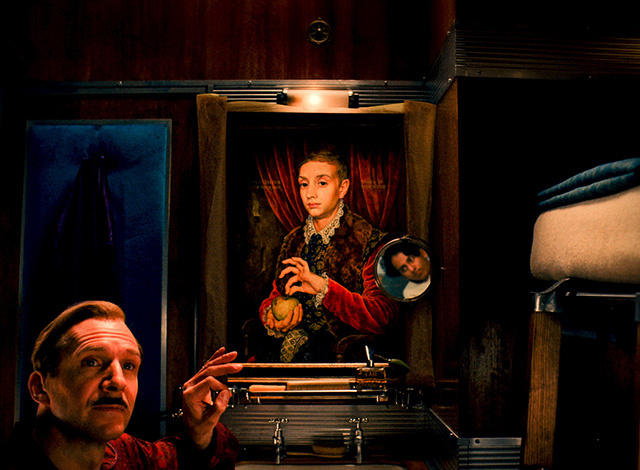
The “us and them” discussion continues in Percepticide while Taylor focuses on the what it means of seeing and being seen. The strong temptation people feel to see is due to the voyeuristic pleasure, which is largely a sexual desire in its own form, and can be manipulated by either letting see or leaving an absence in theatre, with a precondition of distancing. However, once such scopic pleasure is smushed, as in Gambaro’s work, seeing gains an enormous power and it transmits within the crowd, bouncing back and force, connecting everyone as a whole so there is no escape for only one side. Victims are seen closely but can also “returns our look” (Taylor, 135). This duality of mutual visibility reminds me of the very classical scene in Wes Anderson’s The Grand Budapest Hotel (2014), where the M. Gustave, Zero and the Boy with apple in the picture all stares at each other, while at the same time drawing the audience in despite the existence of a screen. It in a way represents the complex relationship between persecuted Jews, the silenced people of kinship (maybe as potential allies of persecutors) , mirroring the tragedy of history as a warning of today, of what tragedy might happen when people turn away from the fact and refuse to see.

The Grand Budapest Hotel 2014

Foucault, Michel. Discipline and Punish: The Birth of the Prison. Second. New York: Random House.Inc, 1995.

Taylor, Diana. “Percepticide.” In Disappearing Acts: Spectacles of Gender and Nationalism in Argentina’s “Dirty War,” 119–281. Durham: Duke University Press, 1997.

Girard, René. “Stereotypes of Persecution.” In The Scapegoat, 12–23. Baltimore, Maryland: The John Hopkins University Press, 1986.

Spectacle and Acting in the Persecution

”Is watching itself a form of violence? Is it a form of in which we must look on as someone we love is humiliated or destroyed before our eyes? Or is watching the unauthorized or even criminal scopophilia of voyeurism?” The spectacle of persecution has always repeated in the history— the cultural revolution during the 60s of China.

The people who announced to be sentenced, was  showed to the audience for several days.  This is the most of persecution method during the cultural revolution. It becomes the scene of torture. Students and Red Guards celebrated to the persecution scene. The victims are like actors, presenting the play to the audience. Watching itself becomes a punishment for the alerting people.

Persecution and percepticide

According to Foucault, as the sovereignty power of making die shifts into biopower ((Foucault 2003, 255), The cruel punishment acts against the human body have become a discipline. Biopower enacts through technologies of power to humanize the penal system and the knowledge of man: i.e. the stereotypical persecution is the consequence of these techniques. (Girard,17) These stereotypies work in the logic of racism: by creating caesuras within a population”, a confrontational relationship is built up between “us” and “them. (Foucault 2003, 255)

In meanwhile, as the system of punishment are to be situated in a certain “political economy” of the body… it is always the body that is at the issue.”(Foucault, 23)The authority uses terror to subject the body and make invisible space in public life. People become percepticide and fail to recognize certain aspects of the society and the self, as their psychological ability to humanely response to the reality is killed by horror.In Taylor’s article, she mentioned how Population is manipulated to see and not to see, and how Propaganda acts on the population level, and build up an ideology, a collective imaginary(Taylor, 122) by The mutuality and the reciprocity of the look, the recognition between “ us and them” happens. The case study about the Argentinian artist Gambora’s work the information for foreigners is used to explain how percepticide could be used for specactors to see, to admit and finally, to act. A theatrical presentation of terror could be the Caution for us not to think of nonvisible spaces as nonspaces. (Taylor, 131) Through the illusionist quality, theatre can be a space for people to transform.

Taylor, D. 1997. Disappearing Acts: Spectacles of Gender and Nationalism in Argentina’s “Dirty War.” Disappearing Acts: Spectacles of Gender and Nationalism in Argentina’s “Dirty War.” Duke University Press.

Girard, R, and Y Freccero. 1989. The Scapegoat. Johns Hopkins University Press.

Foucault, M, A Sheridan, and A M S Smith. 1995. Discipline and Punish: The Birth of the Prison. Peregrine Books. Vintage Books.

Foucault, M. 2003. “Society Must Be Defended”: Lectures at the Collège de France, 1975-1976. Jeff Borrow List. Allen Lane.