Changing Spectators

This week’s readings coincide in how Classical approaches to theater have established predetermined passive roles for spectators. Boal starts his Teatro do oprimido with a succinct, pragmatic background and summary of the system of Greek tragedies codified in Aristotle’s Poetics. The breakdown of the connections between politics and art reveals the coercion of a ruling aristocracy who, in Classical times, utilized public theater as a way of purging social vices through a complex of empathic identification between the spectators and the actors, achieving a climactic catharsis to modify the public’s conduct. Therefore, a spectator is a passive entity who receives an education through gut-wrenching osmosis. Boal’s revolutionary theatrical practices are aimed towards making the spectator an active participant, a spec-ator, in the play, bringing to the fore their own experiences as a way of negotiating the meaning of the play itself and their own social practices.

Through his own theatrical processes, Brecht proposes the idea that this mimetic algorithm that Boal deftly demolishes only produces passive sleepers, spectators overwhelmed to the point of numbness in the theater. While maintaining the perspective that theater’s main end is entertainment and pleasure, his theatrical practice of alienation (or estrangement) is geared towards a more critical spectatorship in which the public is pushed to react critically to the characters portrayed onstage by a process of breaking theatrical illusions of empathy and highlighting the strangeness of everyday actions, permitting spectators to engage critically with the world depicted in art with the world they navigate for themselves.

Likewise, in Performance, Taylor also postulates that, while spectators do function within a system of power relationships inside and outside of the theater, contemporary performances as embodied practices displace the role and placement of the spectator in front of otherwise dramatic acts like live performances. Seeing is a way of knowing, of reaching and even contesting power, and through the viewing of a performance, of a specific context moved by bodily actions, spectators can now be called to action in ways unanticipated by ancient Greek aristocrats, allowing for the creation of spect-actors like Boal and Brecht would have wanted.

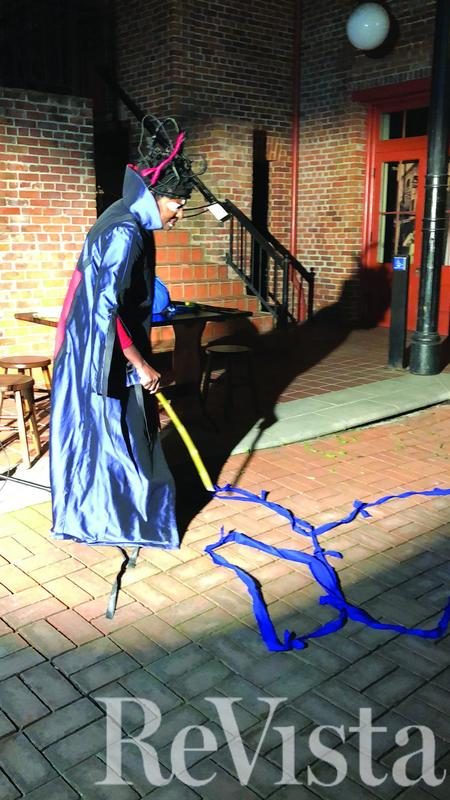
Who transforms spectators to spect-actors?

Although Brecht, Boal and Taylor are separated by decades of technological and social changes, all of them devote a great part of their work to the phenomenon of spectators. Brecht as a true Marxist was fascinated by scientific era that can educate intellectual proletarian and blames theatre for functioning as an entertainment place raises a “cowed, credulous, hypnotized mass”. In his opinion, theatre should “not only release the feelings, insights and impulses” “but employ and encourage those thoughts and feelings which help transform the field” and society. Brecht suggests changing it to “epic theatre” by “alienation effect” when audience is aware that they are viewing a spectacle by actors with whom they do not empathizes. So he considers the transformation of a spectator as fully dependent on the practice of actors, directors and their practices rather than work with spectators.

Boal claims Brecht’s theatre as following:  

“Brecht proposes a poetics in which the spectator delegates power to the character who thus acts in his place but the spectator reserves the right to think for himself, often in opposition to the character”.

Although Boal agrees with Brecht’s critique of Aristotelian “Poetics” and idea of catharsis when “the spectator delegates power to the dramatic character so that the latter may act and think for him” , his theater of oppressed suggests more empowerment of audience when spectators participate in a performance becoming actors themselves. There comes a term spect-actors and a plan of transformation through diverse exercises for audience.

Taylor’s consideration of spect-actors is not limited to theatre, it includes diverse performance forms where spectators get to act on provocative performance even if acting means being silent. In her words, “each performance anticipates its ideal response”. Not performer, actor or director, but a form of performance itself influences the audience and makes it act. Compared to Brecht and Boal, Taylor does not suggest that transformation of spectators should be done through practice with actors or audience but through developing connection between performance and spectator. I guess it works better in the world where stage and reality are not separated anymore. Where a common action can be effectively evoked through an Instagram filter rather than ideological spectacle.

An art fit for the times (and place)

Last week, we discussed the political horizon of performance as that which proposes new possibilities of being and orderings of the world. This week’s readings further the conversation on performance and politics; while the Brecht and Boal texts take theater as their focus, Taylor’s text addresses the multivalent ways in which performance, through acts of doing, “allows us to see” (6); thus one of the ways in which performance labors can be “showing that change is possible” (20). I found her use of the concept of “frames” to be productive in considering the contexts in which performance lives and would like to discuss the other texts through this notion.

Brecht critiques the theater that represents life “according to the old recipes” (183) due to its inadequacy to “make sense” of the time period he concerns himself with in this text, which is the scientific age. Instead, he argues for the constant evolution of theater as “an art fit for the times” (186), the connection between “art” and the “times” as having a pedagogical purpose: to “awaken” its spectators from the illusion of a consistent world and make possible the recognition of a contradictory one. I understood Brecht’s text to be operating within the frame of historical condition and possibility of action, which he negotiates through a proposal of “new alienations” that work precisely towards “alienating the familiar” (192) through a materialist dialectic (193) that unveils the contradictions/inconsistencies of productive life. The politically activating potential in Brecht’s text finds itself in the transformation from “passive acceptance” to “suspicious inquiry” on the part of the audience; the techniques mentioned, from the actor who is a “character rather than a caricature” (196), to a story that is “knotted together” (201), all seek to mobilize a “higher pleasure” of performance that produces life itself.

Joseph Michael, Voices for the Future. One of the questions the texts this week made me think around is: How can we evolve an art fit for the times (and place) in our present reality?

Boal’s text invokes Brecht’s work but makes the challenge that Brecht presents the subject as “objeto de fuerzas sociales, no ya de los valores de las superestructuras” (12). His contribution is to frame political theater in the Latin American context, as that which labors towards “la destrucción de las barreras creadas por las clases dominantes” (12), whether it be between actor/spectator, protagonist/chorus, or the theatrical means of production. It is in this way that Boal presents theater as a “liberatory weapon” (11), as that which has the potential to dehierarchize and promote participation when it is in the hands of the people. Embodiment, which is central to the techniques Boal proposes, also finds its way “front and center” (Taylor 1), in Taylor’s text. I’d like to discuss this idea of performance as ontology (Taylor 3) more in class as I find it very productive to think with in terms of durations and becomings.

Maria Magdalena Campos-Pons, Poetformance

Politics through art


Reading through this week’s materials is quite a wonderful adventurous journey. Brecht on Theatre, Theatre of the Oppressed and Performance all touched upon what should theatre (performance) do as well as its capability of affecting human society, especially in the modern age of science. The approaches and the focuses, however, did vary.

Brecht began with questioning the essence of theatre, and following the footsteps of Aristotle, he concluded that it is a representation of men’s life together in human society, and it should be of sheer entertainment, a “purification which is performed not only in a pleasurable way, but precisely for the purpose of pleasure”. However, it does not mean that theatre brings nothing but laughter to the world. It’s aesthetic meaning truly lies in its unique way of creating alienation and how it reflects on people’s inner feelings and makes a difference, as “the pleasure felt… must be converted into the higher pleasure felt when the rules emerging from this life in society are treated as imperfect and provisional”. In fact, such conclusion leads back to the first chapter in Theatre of the Oppressed, where Boal traces back to the very origin of poetry, theatre and tragedy and lands on Aristotle’s theory of art as recreation. According to Aristotle, art is the recreation of all creating principles of nature, and it even goes beyond into self perfection in order to correct where nature has failed. Based on this statement, Aristotle also developed the idea of “the sovereign art”, which is the rules above all kinds-Politics. “Nothing is alien to politics, because nothing is alien to the superior art that rules the relations among men”, therefore every art is associated to the vast horizon of politics, and bringing its education within each performance.

Performance acknowledged the fundamental theory of theatre as art, yet explored performance as well as its interaction with politics from a broader perspective, which is relatively new but also universal. As an extension of Aristotle’s “imitation”, the crucial term “doing” is brought into sight in supplement, strengthening the value of acting, repeating with difference, and transmitting memory, knowledge, cultural identities, etc. With such strong social element and bond, performance spontaneous but also legitimately enters the field of politics and activism, where its core of entertainment becomes the best strategy and method.

Transforming the Spectator

Regina José Galindo, No perdemos nada con nacer/We lose nothing by being born

Performance has the power to illicit social change from spectators through its critique of politics and everyday life. In confronting Aristotelian philosophy Boal explains, the coercive system of tragedy which plagues art does not work to engage the audience in revolutionary acts (47). The author laments, though Aristotelian systems of knowing acknowledge what already exists, it works against the spectator in that it only pushes them to conform to society rather than transform it (Boal 47). Instead of looking at theatre as a representations of nature, we must come to acknowledge it as a form of transformation. Boal suggests we make the move towards spect-actors instead of spectators as the former acknowledges the viewers and the performers potential for political and revolutionary action.

Taylor expands by noting viewership can only be understood as “functioning under systems and relations of power” (80). Though performances can often push audiences to uncomfortable and sometimes confusing spaces, it ultimately forces the witness to react and/or respond to what it being shown. Brecht points to the spectator-performer relationship as a mechanism of theatre which allows individuals to breed empathy (183). It is this characteristic that can bring the viewer to reflect on their world and subsequently take part in social change.  

politics and performance 2

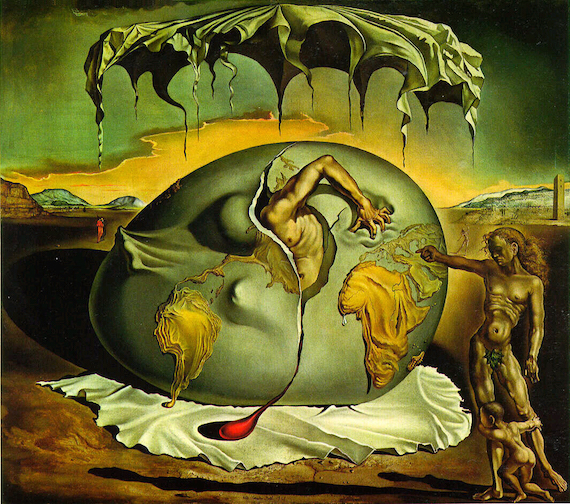
geopoliticus child watching the birth of the new man, salvador dalí, 1943. i just google searched embodiment… it looks like the human is trying to become separated from the world, being birthed from it, cutting the umbilical cord. this separateness is assumed in Brecht and Boal, but in Taylor’s more post-humanist understanding of performance, the ‘human’, the ‘non-human’, and the ‘cyborgian’ appear more interwoven.

Whereas the focus of last week’s readings seemed to have resided in an articulation of what ‘politics’ is in terms of what it does, this week’s readings of Brecht, Boal and Taylor aim to articulate what ‘performance’ is in terms of what it does, offering a sort of meta-analysis of the questions of sameness between these two concepts.

If this is the case, then the main arguments of Brecht, Boal and Taylor are located in their articulations of how, as Boal puts it, “… all theatre is necessarily political, because all the activities of man are political, and theatre is one of them” (ix). Boal describes Brecht’s poetics as “those of the enlightened vanguard” (155)—his poetics are Marxist, as they assert that social being determines social thought— ‘man’ is an object of social forces; he sees the theatre as a place for entertainment, with ‘productivity’ being the main source of entertainment (186); he wants the theatrical spectacle to be the beginning of action (106).

Boal, in many ways, picks up where Brecht left off. He points out that Brecht’s position is clear: the character is not free to act at all (92) and uses this as a launching pad in a movement that transforms the spectator into an actor. This movement, accompanied by the abolition of the private property of the characters, constitutes Boal’s proposed “poetics of the oppressed” (122).

Taylor moves us forward from this in a tremendous leap, maintaining the structure of the central theory present in Boal’s poetics—that “people absorb behaviors by doing, rehearsing, and performing them…”—while incorporating important questions pertaining to the body from the perspectives of critical race theory, feminist and queer theory, and post-humanist theory (13). This leads us to a more nuanced discussion of ‘transforming the spectator to actor’—what Taylor calls the ‘spect-actors’: people capable of acting and interrupting the performance or changing their roles they’ve been assigned (80).

Rather than getting stuck in the tussle between the Hegelian absolute subject and the Brechtian formulation of the character as the object of economic and social forces, Taylor marks the body as both the consuming subject and the object of consumption (97). This understanding of the body, which Taylor takes through complex rethinkings of experience, ‘scenarios’, and context, enables us to engage with a politics/performance that is not anti-history, anti-memory, and oriented towards percepticide, as has been the “American” way (172).

Evolution of the audience

Occupy Wall Street

” We know that barbarians have their art. Let us create another.

(Brecht, 31)

If viewed in chronological order, the concept of the audience has been greatly developed in the arguments of the three theorists. The context and framework of the three authors are not the same:Brecht used the dilemma of reinterpretation of classic in modern theater as the foothold of his discussion. He argues that “We and our forbears have a different relationship to what is been shown .”(187)

Boal puts theatre works into the frame of social development. Taylor casts into light the performance activities from the 1960s and keeps social movements in her spectrum of research.

Brecht advocated the separation of roles and actors which sets the audience free from empathy effects and makes a transformation from the “old-affects” to Alienation possible ( 192 ).

“The audience must become the character.”

(Boal, xxi)

Boal combed the ancient theater’s Geneology and thought that the purpose of the traditional theater was to emphasize a determined social and ethos. At the same time, he thinks that Brecht’s work to break the fourth wall was not completed (xx). The invasion as symbolic trespass, audiences must be actively involved as “spec-actors”, so that the fourth wall can be broken through. (xxi)

“Performances often challenge the limits of the artists. But they also challenge those of the viewers.”

( Taylor, 72)

With the embodiment and the socialization of performance, the relationship between performance and the audience has become more complicated. Through the premise of “seeing is doing”/” viewing is an action” (82), Taylor differents the audience in these contemporary performances. The audience becomes plural in her discussion as performance is collaborative work in a social movement aspect. “The performance itself asks audiences to do something, even that something is to do nothing.” (86) She proposed that “affect” and “E-motion” as vital for the animation of the performer and audience, which opposes Brecht‘s attitude toward “old affect”.

The common characteristics of the three theorists are to recognize the epistemology value of performance/theatre, to reveal the power of art as political intervention. By putting the hierarchy essence of“catharsis” and “empathy” into question, the relationship between the performance and the audience is re-examined, the possibility of the citizen as the audience evoluted.

Go out and see things!

The three readings this week – Boal, Brecht and Taylor – highlight the intentional engagement of the social, particularly with the minoritarian subject. The result of this social engagement solidifies the ways in which we are often unable to understand politics without performance, and vice versa.

Quien puede Borrar las huellas
Regina José Galindo

“A Regina Galindo lunch break.”
– Diana Taylor, Performance

Boal argues that Aristotelian theatre, which was inherently designed intimidate the audience and eliminate “bad” or illegal tendencies in the audience, “is not the only form of theater” (Boal xiv). His chapter, “Poetics of the Oppressed,” dives heavily into examples of “theatrical” exercises which engaged (in this case) the minoritarian subject in a process of creation and narrative, and by doing so he subverts Aristotle’s Poetics to liberate the oppressed and disrupt the hegemonic ideologies of theatrical form. This engagement in the social is mapped out visually and performatively in Taylor’s book Performance. The concrete examples of performance, accompanied by striking visuals, inextricably linked the political and the performance, the performer and the spectator, and more often than not, the performer transformed the spectator into the “spec-actor” by encouraging (and often forcing) the public to engage in the performance and take responsibility for their action (or reaction). Brecht (who’s rhetoric I struggled the most with this week), in reference to representation on the stage, states that, “All that mattered was the illusion of compelling momentum in the story told…Even today we are happy to overlook such inaccuracies if we can…grasp the immense or splendid feelings of the principal characters of these stories” (Brecht 182). He is relying on the engagement of the social to further our understanding of performance as a tool within a (potential) political arena. Taylor supplements this with a more concrete example, “Political advisers know that performance as STYLE (rather than ACCOMPLISHMENT) generally wins elections. Advisers ask whether a performance is effective or memorable, not whether it corresponds to verifiable facts” (Taylor 90). Taylor’s book is a performance within itself, often directing and diverting the readers’ attention to certain words or passages through spacing, style, and size of the text and visuals. These readings leave me with questions of the power of disbelief, how to make someone believe, the power of transformation, and how important it is to engage the social – to engage the often considered, “subject” – as a necessary method to disrupt hegemonic forms and ideologies in performance. 

Political Performance

While last week we focused on political theories in the abstract, the writings this week had to do with conceptions of politics within and through performance. I was drawn to Boal’s work in breaking down the numbing of contemporary audiences through Aristotelian structures of “coercion” which built upon Brecht’s disavowal of the entertainment of theatre. Through these structures, performance is a practice, rehearsal, or training ground for the “real” political sphere, a place where we are able to think critically about and try-out new strategies of disrupting economic realities and distributions. However, for both, the performance while it is political is not necessarily politics. In the Taylor text, we are introduced to a more nuanced definition of performance where art provides “a means of intervention into the political (which she cannot control) by using her body, her imagination, her training, self-discipline,” (116) and that “large or small, visible or invisible, performances create change” (10). Here, the performance is more than a practice round for the political sphere, it is the sphere in its ability to change and transform people. These works continue to make me think about the power of performance and the affect it creates, and how these tools are used in the political. When we break down the barrier and view politics and performance as the same thing, how does this help us reflect on and and analyze transformational claims (perhaps, “truths”?) being formed in either methods?

Object-Subject Bodies: Agency And Participation In Performance

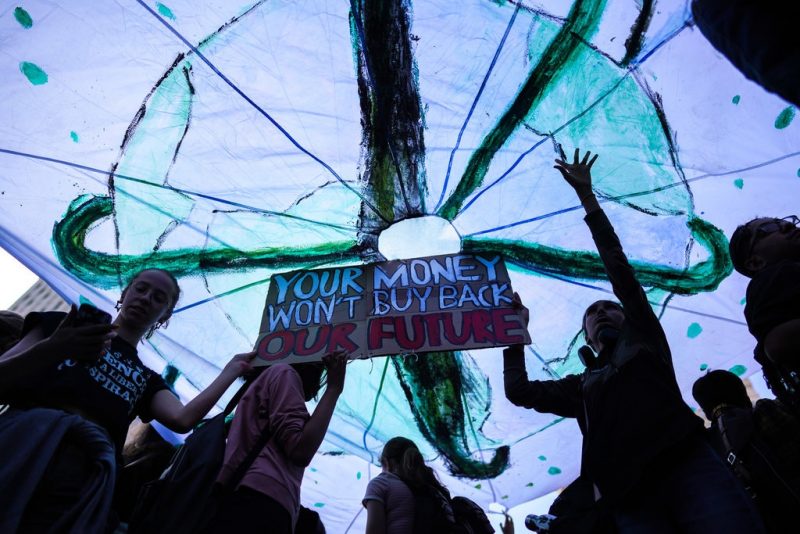
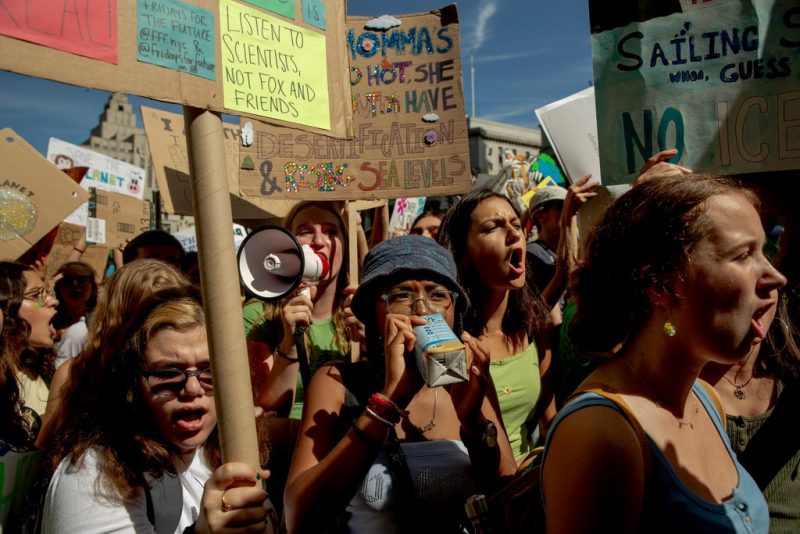
Images from climate strike on September 20, 2019 in which millions of people walked through the streets of New York City. https://www.nytimes.com/2019/09/20/nyregion/climate-strike-nyc.html

“PERFORMANCE…[i]t’s a doing, a done, and a redoing. It makes visible, and invisible; it clarifiesand obscures; it ephemeral and lastingput-on, yet truer than life itself…performance is radically unstable, dependent totally on its framing, on the by whom and for whom, on the why where when it comes into being.”[1]

Diana Taylor addresses the temporality and limitations of performance because of the liveness, the idea of doing and done. This doing and done translates into an act of belonging or striving to belong in a specific way, or rather existing, to make sense of the conditions of object-subject relations in society. In conversation with theatre artist Augusto Boal, the ephemerality of performance points at the liveness and agency of its subjects—the “spect-actor.” “In order to understand this poetics of the oppressed one must keep in mind its main objective: to change the people — “spectators,” passive beings in the theatrical phenomenon — into subjects, into actors, transformers of the dramatic action… In this case, perhaps the theater is not revolutionary in itself, but it is surely a rehearsal for the revolution. The liberated spectator, as a whole person, launches into action. No matter that the action is fictional; what matters is that it is action!”[2]This call to a new theatre gives voice and action to the people of the community, the people the piece is about. This action is a framework for revolt and reclamation. With this tool is mind, how successful is forum theatre discussing issues and reclaiming bodies (transformation of object to subject) of its “spect-actors”?

Bertolt Brecht argues that theatre should be a form of entertainment, a tool to delight, but it is also a great vessel for education and changing the way the audience believes they should function during a performance. He agrees in the active participation of the spectator through alienation. This alienation is deeply connected to object-subject relations for bodies in protest. 

[1]Taylor, Diana. Performance  (North Carolina: Duke University Press, 2016), 41. 

[2]Boal, Augusto. Theatre of the Oppressed (New York: Theatre Communications Group, 1993), 122.

The affective/effective and a critique of empathy

The three readings for this week each outline alternative potentials (and now actualized roles) for theatre and performance within contemporary divisions of labor and structures of power.  Bertolt Brecht and Augusto Boal each begin with a critique of traditional or Aristotelian theatre, accounting differently for the entanglement of these practices with political interests. Boal interprets Aristotle’s definition of tragedy as a tool for political repression. He says that the catharsis elicited from the spectator in theatre represents “the purgation of all anti-social elements” (47) and provokes a realignment with the ‘moral’ expectations of the State. Brecht similarly critiques the passivity of spectators in traditional theatre: “Seeing and hearing are activities, and can be pleasant ones, but these people seem relieved of activity and like men to whom something is being done” (187). While Boal reimagines theatre’s revolutionary potential by proposing the roles of the “joker” and the “spect-actor”, Brecht instead suggests that theatre and its actors should create a sense of alienation rather than identification from the audience (“I must not simply set myself in his place, but must set myself facing him, to represent us all. That is why the theatre must alienate what it shows” (193)).

The Transborder Immigrant Tool, Electronic Disturbance Theatre 2.0/b.a.n.g lab (2007)

I was most struck by the recurrent critique of empathy present throughout the readings. In Performance, Diana Taylor asks “does the performance event have to have happened?” (66) She follows this question with a description of the Transborder Immigrant Tool (TBT) which, despite never fulfilling its intended function, produced political consequences because of its potential and its intentions. The work is significantly not reclaimed because of the empathic outcomes for those who did “experience” it, but for its role in disturbing political discourse. Still, this example of performance could be critiqued from Brecht’s perspective as it is not exactly set “at the disposal of those who live hard and produce much” (Brecht, 186). Taylor is, then, expanding the possibilities for political engagements within performance. She later says “Performance is not judged in terms of true/false; being/pretending. Instead, the affective is the effective.” To what extent does this challenge/extend the positions of Boal and Brecht in their articulations of the political potential of theatre? Is this affective mobilization related to empathy or does it produce some more profound/radical political transformation?

Finally, does the establishment of conventional practices of resistance and the categorization of performance within the realm of “art” limit its transformative political potential? Can these practices of political theatre and performance still be said to participate in Rancière’s “aesthetic regime” of art (if I understand the concept properly)?

Actor / Observador

¿Cuál es la relación entre quien actúa y quien observa? En las lecturas de esta semana, los tres autores –Brecht, Boal y Taylor– reflexionan sobre dicho interrogante. Aunque en principio uno pensaría que desde la mirada de Brecht el teatro tendría únicamente como prioridad y meta central el divertimento o la pura producción de placer en el espectador, pues “Nothing needs less justification than pleasure” (Brecht, 181), esto no impide que a su vez se piense en una audiencia capaz de transformar y de ser conmovida por lo que sucede en el escenario: “one has to admire the theatre folk who, with so feeble and reflection of the real world, can move the feelings of their audience so much more strongly than does the world itself (…)  the spectator wants to be put in possession of quite definite sensations” (188). Sin embargo, aunque eso está consignado en este texto de Brecht, quien va más allá de esta relación activa (quien actúa) y pasiva (quien observa) y quien de hecho quiere desmontar y/o invertir estos roles es Augusto Boal, con el fin de demostrar cómo la gente (los espectadores) “reassume their protagonistic function in the theater and in society.” (Boal, 120). Para demostrarlo, a partir de unos experimentos consignados en su libro, el autor pone a prueba a diferentes sujetos para cumplir su objetivo principal: “to change the people –“spectators”, passive beings in the theatrical phenomenon– into subjects, into actors, transformers of the dramatic action.” (122). En este sentido, mientras que Brecht ve principalmente al teatro como espacio para el divertimento, Boal lo ve como una verdadera ‘arma’ de transformación.

Por su parte, Taylor, analizando los diferentes significados que se le puede adjudicar a la palabra ‘performance’, pone sobre la mesa las variables que pueden existir en la relación ‘performer’ ‘actor’ y espectador: “Performance can call spectators to action, but it sometimes puts them in very confusing, powerful, disempowering or uncomfortable situations. (…) Performance ask that spectators do something, even if that something is doing nothing. Each performance anticipates its ideal response. Performance is a doing to, a thing done to and with the spectator. (86). Como se ve en la cita anterior, la Mirada de Taylor se alinea mucho más con esta idea de ‘Spect-Actor’. Tanto lo que ocurre en el teatro como por ejemplo lo que sucede en una protesta, implica que actores y observadores se involucren bajo una serie de códigos, rutinas, gestos o comportamientos pactados, que pueden ser explicados en el momento en el que surge el performance o que de manera natural y orgánica se van dando o que incluso pueden ir cambiando: “Performance, however, is not limited to mimetic repletion. It also includes the possibility of change, critique, and creativity within frameworks of repetition” (Taylor, 15). Esta posibilidad de cambio inesperado puede surgir tanto desde el lugar de quien ‘actúa’ como de quien ‘observa’.

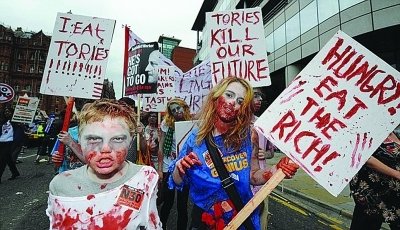
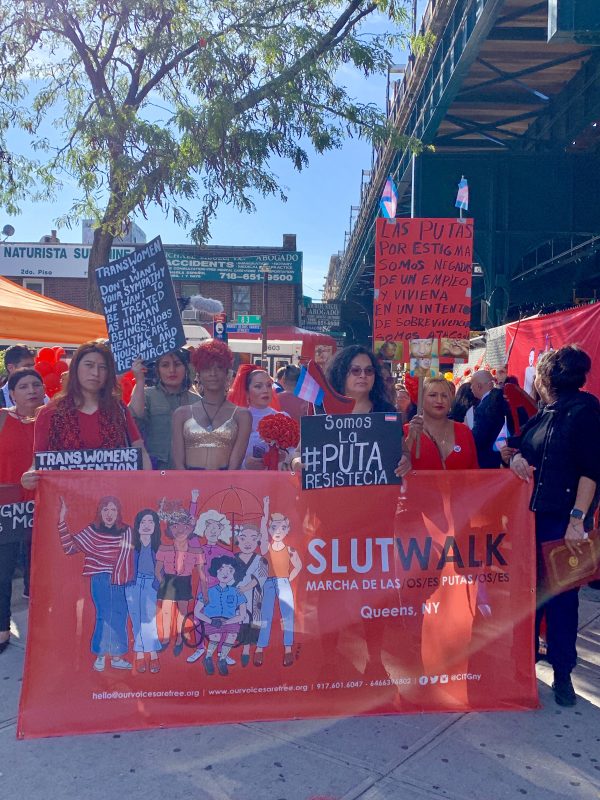
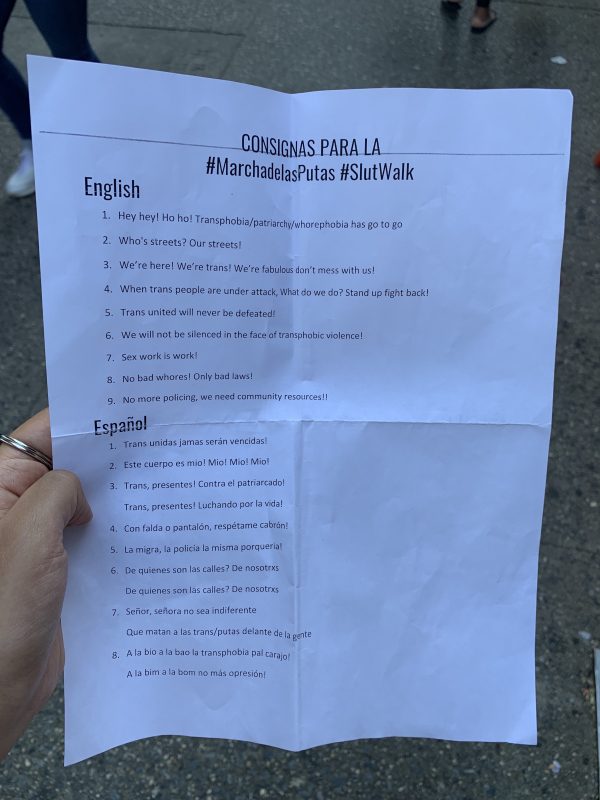
La marcha de las putas, 20 de septiembre de 2019


Performance and social change

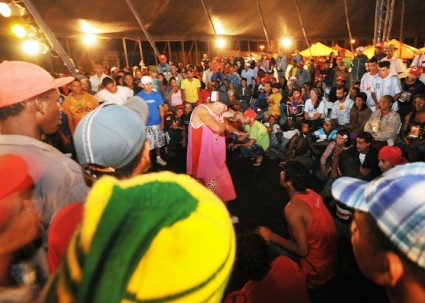
Teatro do Oprimido no Movimento do Sem Terra (Brasil)

http://terraemcena.blogspot.com/2015/07/a-experiencia-do-mst-com-teatro-do.html

Os três autores dessa semana, Diana Taylor, Bertolt Brecht e Augusto Boal, destacam o potencial de transformação social do teatro e da performance. Em seu livro Diana Taylor realiza a tarefa árdua (devido a amplitude de significados) de analisar a performance: “Lo que es, lo que hace, lo que nos permite teorizar y la importancia de entender su compleja relación con los sistemas de poder” (14). Taylor apresenta as diversas perspectivas sob as quais é possível ver a performance, mas há uma ideia no livro que me parece central: a performance é “una práctica y uma epistemologia, uma forma de compreender o mundo y un lente metodológico” (31). A questão com a qual Taylor conclui o texto, “si el performance es un acto político por definición, o si lo político siempre es performance”, está diretamente conectada com as questões que os outros dois autores buscaram tratar em suas práticas artísticas. Augusto Boal via no teatro uma arma muito eficiente de transformação social. Por isso, como ele explica no livro Teatro do oprimido, dedicou a sua vida para a criação de metodologias eficazes em transferir os meios de produção do teatro para o povo, para as comunidades, para as os estudantes, para os movimentos sociais. Para Boal, o a poética de Aristóteles, que pressupõe o espectador como “vítima passiva”, é um sistema opressor de teatro, pois nele são delegados “poderes aos personagens para que atuem e pensem em seu lugar” (180). Boal propõe, portanto, que a plateia passe de espectadores para espec-atores, não só do teatro, mas de suas próprias vidas e da revolução social e política. Bertolt Brecht, por meio das suas setenta e sete proposições no Pequeno Organon para o Teatro, toca na dimensão pedagógica da cena e em como a atuação e a encenação devem se dar para que ocorra a conscientização do espectador (e não somente a identificação acrítica do teatro dramático burguês). Os três textos apresentam a performance e o teatro como práticas potentes de transformação social, mas também como lentes com as quais os artistas e os espectadores, ou melhor, espec-atores, podem perceber, como afirma Taylor, “os complexos sistemas de poder”.

Brecht, Boal, and Taylor’s Readings

In this weeks readings, the relationship between audience and actor were prevalent in Brecht, Boal, and Taylor’s work. First I’d like to begin with Performance, where we see an expansion of the thing one is doing and something that is done. It seems that Taylor is expanding the conversation on how audiences and spectators influence performance or they also take part in performing. She also points out how politicians as well as actors in terms of theater, engaged and shape the body, for example, colonialism, capitalism, religion, and dictatorships. I think that this book, performance, is itself, an act of performance because it engages the reader through photographs of performances. Brecht gives us an understanding of the theater, he mentions that it’s a platform to experience pleasures. Brecht, Taylor and, Boal in theater of the oppressed speak about the self and reality, meaning that as spectators or audience members, even in the form of a political event, we alienate from the reality to what its our our existence. Where theater, and like the book performance tells us, as spectators or audience members , Brecht promotes art as a way to intervene with history, which my interpretation of this would be, as spect-actors, to intervene with power and transform the realities in which we live.

Beware the speaking thing

In his work The Politics of Aesthetics, Ranciéré turns to Aristotle’s view of the political being as, “a speaking thing” (12). Highlighting, artisans, or the poor, do not have the privilege of overseeing a community because their work will always take priority. This marks a clear distinction between who may partake in political discourse and who may not. However, there is a disjunction between speaking things and the privilege of speaking. Balibar illuminates, citizenship can not be solely based on verbal capacity as speech is both a power relation and a skill (4). If political representation relies on the ability and privilege to speak for oneself, then there will always be subjects who go unheard. As such, communities who are governed by those that have particular functions of speech must be cautious of the “good orator”. Sophists, those who excel in and take advantage of the art of persuasive speaking, have the ability to misuse their abilities to manipulate the public. Taking from Balibar, every individual combines several identities to make one (28). If this is the case, then we must question whether the active political being inherently takes advantage of their speaking skills to serve one or more of their various identities, rather than the whole community.

Metaphorical Weed-Whacking

The readings this week, to be quite frank, were a struggle. However, after much metaphorical weed-whacking, it is clear that one of the ways in which these three theorists interact with one another is on the basis of equality and emancipation. Ranciére states that, “Politics exists when the figure of a specific subject is constituted, a supernumerary subject in relation to the calculated number of groups, places, and functions in a society” (51). The unrecognized party – the minoritarian subject, in this case – struggling for equal recognition is what constitutes politics. Balibar supplements an understanding of this struggle for emancipation with, “The autonomy of politics…is not conceivable without the autonomy of its subject, and this in turn is nothing other than the fact, for the people, that it ‘makes’ itself, at the same time as the individuals who constitute the people confer basic rights upon one another mutually” (4). In this sense, the political again is only “made” within the body of the subject; it is made within the struggle of the subject’s body for equal recognition and emancipation, of which can only be gained through an outside source. Meanwhile, Mouffe, (in my view) takes the idea of a binary, of an “us/them” dichotomy in politics and puts it in the framework of the positive. “My claim is that it is impossible to understand democratic politics without acknowledging ‘passions’ as the driving force in the political field” (Mouffe 6). She moves toward a productive view of conflict. Or rather, moves toward a view in which politics should provide the “arena” for a productive and passionate conflict, which in itself constitutes politics. There is an undeniable exploration of the ‘dominant’ power bloc and hegemonic ideologies within these texts, and I am left with questions of embodiment, of power, of the visual representation of the struggle for equality, and of political aesthetic in performance.