Never Lived Nor Die

As the leader of an indigenous guerrilla group Zapatistas, Marcos changed the politics of Mexico as a grass-roots rebellion. Later he became a symbol of international democracy movements. “Marcos” becomes more than one person. As the words in the Between Light and Shadow: “ The construction of Character Marcos –’So then, as I mentioned, the work of constructing this character began. One day Marcos’ eyes were blue, another day they were green, or brown, or hazel, or black – all depending on who did the interview and took the picture. He was the back-up player of professional soccer teams, an employee in department stores, a chauffeur, philosopher, filmmaker, and the etcéteras that can be found in the paid media of those calendars and in various geographies. There was a Marcos for every occasion.” Marcos is an embodiment of an “Non-free media”. The movement becomes more decentralized and establishes a new wave: “Marcos, the character, was no longer necessary. The new phase of the Zapatista struggle was ready…My name is Galeano…Anyone else here named Galeano? [the crowd cries, “We are all Galeano!”] Ah, that’s why they told me that when I was reborn, it would be as a collective. And so it should be”.
The characteristic of Marcos is that he is masked. As a military force in military and public opinion, he destroys the individual of his own, and no one recognizes him. That is to say, everyone can be him, and he is likely to change. The leader of an idol has become less important. The people who are truly autonomous do not need idols, do not need leaders, only need friends, neighbors and a system that allows small communities and individuals to coexist with the collective.


Different people have different Marcos. In this sense, “Marcos” is no longer a person’s name, but a symbol of struggle and creation; the battle strategy that Marcos adopted is irrelevant. Even he thinks, not light, just flashing / not a path, just a footprint / not a guide, just one of the paths to tomorrow. This is what we are trying to explore is the reason for the rise of the Zapata movement and its significance to us.
As Taylor points out, after Marcos publicly absented himself, the figure of Marcos is no longer important: “Why was “Marcos” no longer necessary? The man formerly known as Marcos gave a few indications. Various shifts had tilted the center of the movement in a different direction. …The younger generation, born into Zapatismo, was taking the lead. Moreover, the movement was re-indigenizing itself—shifting decision making to its indigenous leaders and developing other, more horizontal, leadership strategies (“rule by obeying”)”. Marcos can be seen as a universal impulse in the different groups all over the world: “Marcos” reactivated the trickster’s potential of enormous trans-possibility: trans-race, trans-gender, trans-personal, trans-national, trans-historical”. Marcos could never be killed anymore: he never lived nor died.


Dominguez suggests the Zapatista is a postmodern revolution because “ they had somehow accomplished, by ripping into the electronic fabric, this possibility of expanding a network and manifesting a network without having access to a network”. The Zapatistas challenged Dominguez’s definition of electronic civil disobedience: “But there was this other aura that I felt that the Zapatistas, whether by purpose, by intent, or by accident, were calling for the strengthening of what I would call electronic disturbance, electronic civil disobedience. They seemed, in their network intergalactico, to be creating a platform that I had not imagined. In the same way they ripped into it, I was ripping into the space they had created. That aura was that somehow there could be a possibility of interconnecting real bodies embedded outside of the grid as a direct manifestation of the ethics and aesthetics of how networks and tactical media should really respond: not as anonymous, techno-driven cells who took on the power of whatever the issues were, but really a bridging between those who are most marginal outside the system and those systems that seemed to be the site of new power. And that they could really reconfigure it at a distance what was important about that element: we could dislocate it and reconfigure it”. Internet makes people easy to assess the cyberspace. The contestation movement redefined the possibility of electronic disturbance. Launching information war weapons is a postmodern revolution of aesthetics and electronic civil disobedience. It is poetic and it has already surpassed the definition of cyberwar, cyberterrorism, cybercrime. As Dominguez said “So I think that digital Zapatismo allowed a conversation to manifest itself around what these gestures were. And also what emerged at the end of 98 was that digital Zapatismo was then able to try to translate through its practices of electronic disturbance theater into the growth of hacktivism”.

The story of Marcos is still continuing. In Our Word is Our Weapon, the indigenous groups struggling and eager to liberation, will be forever memorized, and influence more and more international decentralized movements towards social justice: “. . . in which Marcos, in an attempt to raise awareness of what is truly at stake in Chiapas and in Mexico, points to the institutionalized corruption of values that encourages the incursion of globalization into their nation and betrays all Mexicans. . . . in which the indigenous voice of resistance and dignity speaks through Marcos, and Marcos speaks of the indigenous life and spiritual values that sit at the heart of their communities and at the heart of Mexico. . . . in which war is declared against oblivion and prejudice”.
Decentralization

From reality TV to social media, the boundary between entertainment and news become more and more blur and almost collapse. Edwards thinks, to understand the phenomenon, we need to investigate the role of media played for Trump—”What complicates the distinction between reality TV and Twitter is that some of the same audience carries over from one to the other. The massive presence of bots in the audience of Twitter is new, and the means of engagement with the president’s utterances are quite different for users of the social network than for consumers of television broadcasts…But to get to Twitter, or rather to arrive at the place where his use of Twitter would be so effective, Trump had to play part in a transformation of television itself”. (Edwards, P32) Additionally, Edwards states the relationship between culture and politics shifts into a soft power formation. In the age of Trump, American popular culture altered the politics in America: “The transformation was not produced only by Trump himself, although he has had an outsized role in altering the manner by which US culture circulates globally. Nevertheless, the effects on politics (both domestic and international) are more important than the causes. The global circulation of Donald Trump’s rhetoric and persona beginning with the 2015 campaign ruptured a crucial divide between popular culture and political discourse, and under Trump, the US political system itself has become a form of global entertainment”. (Edwards, P 27)

In the new relationship between digital media and society, technology itself becomes the centre of politics in some way. The example of Trump`s tweet illustrates how his performance style solidifies his audience by direct contacting and thus challenged the traditional mainstream media. Edwards says: “The decade since then has generated social formations that intersect and interact with digital technology so closely that it is often difficult to name where one begins and the other ends. Of course, historical perspectives on a moment while it is still taking place are both difficult and urgent. It is not incidental that we have seen the expression of revolutionary impulses around the world, which, whether they have been successful or not, are in some way built on people finding a voice that they did not have before, and now think they have”. (Edwards, P29)

Similarly, Poster brings up the idea that how digital media technology contributes to the social reality construction—He questioned in the information era, Western political ideology such as the liberal and humanist are seriously questioned. The subject of citizenship and previous social relations are overturned by the new technology. –” The architecture of the internet, by contrast, is that of a decentralized web. Any point may establish exchanges with any other point or points, a configuration that makes it very difficult if not impossible to control by the nation-state. ..In all of these ways, the internet contains the potential of new practices. The process of realizing this potential is, it must be emphasized, a political one”.

Poster discuss the new relationship between people and society by the redefining the notion of human and citizen in the information era. By drawing the postmodern theory, Poster argues that new media may contribute to decentralization, brings interaction to people, and may not leads to new imperialisms. Poster was critiquing Hardt and Negri`s theory: “The internet holds the prospect of serving to introduce post-national political forms because of its internal architecture, its new register of time and space, its new relation of human to machine, of body to mind, its new imaginary, and its new articulation of culture and reality. Despite what may appear in the media of newsprint and television as a celebration of the internet’s harmony with the institutions of the nation-state and the globalizing economy, new media offer possibilities for the construction of planetary political subjects, netizens who will be multiple, dispersed and virtual, nodes of a network of collective intelligence. (Poster, P84)

 The national identity has been challenged by globalization. Poster says: “In the present context, one must tread lightly and carefully in any critique of the limitations of these bulwarks of human freedom. Yet circumstances today present an extraordinary case of transcultural and transnational mixing.” Also, Poster brings up the notion of netizen to demonstrate how identity crosses the countries: “In contrast to the citizen of the nation, the name often given to the political subject constituted in cyberspace is “netizen.” …Yet the netizen might be the formative figure in a new kind of political relation, one that shares allegiance to the nation with allegiance to the net and to the planetary political spaces it inaugurates. Certain structural features of the internet encourage, promote or at least allow exchanges across national borders”.

While Poster discusses about how digital performed in the politics, Critical Art Ensemble (CAE) analyse the new paradigm of digitality by investigating culture vectors, such as digital economy, digital arts, information theatre—”the formation of digital theatre (in the broadest sense of this term) is a struggle over the micro-sociology of the performative matrix of everyday life” . (CAE, P151) “Over the past century, a long-standing tradition of digital cultural resistance has emerged that has used recombinant methods in the various forms of combines, sampling, pangender performance, bricolage, detournement, readymades, appropriation, plagiarism, theatre of everyday life, constellations, and so on”. (CAE, P151)—CAE talked about how digital resistance challenged tradition social specialization division and art form, to lead a call for interdisciplinary collaboration. 

Digitality creates hybrid analogic forms of aesthetics: “however, in the aesthetic realm of the commodity, the appearance of difference is more desirable. Today auto manufacturers offer a digital infrastructure with an analogic superstructure…To this day, digital aesthetics is still on the economic margins. While it is dominant in appearance in the form of the mass media-now literally the domain of the digital-the high end of value is still found in the analogic “ (CAE, P154) The notion of Plagiarism seems become a form of cultural production. When aiming to the expectation of sameness, counterfeit is no longer simply counterfeit. One good example of digital arts may be Duchamp: “With his readymade series, Duchamp struck a mighty blow against the value system of the analogic. Duchamp took manufactured objects, signed and dated them, and placed them in a high culture context. Duchamp’s argument was that any given object has no essential value and that the semiotic network in which an object is placed defines its meaning, and hence, its value.’ (CAE, P155)

Also, by mentioning recombinant theatre and information theatre, CAE argues the authority can be distributed through bodies and reshaping the subjectivity: “Gilles Deleuze and Felix Guattari have persuasively argued in A Thousand Plateaus that the matrix of authority is centered on the body…In other words, those involved in the virtual theatre are nothing more than neutralized subjects incapable of disrupting the matrix of authority and thus establishing an autonomous subjectivity”. (CAE, P162)

Reference:

Brian T. Edwards, “Trump from Reality TV to Twitter, or the Selfie-Determination of Nations”

Mark Poster, “Citizens, Digital Media, and Globalization”

Critical Art Ensemble, “Recombinant Theatre and Digital Resistance”

How to shape a fact?

The Prince by Machiavelli may be presented to the monarchy`s education at that time. As a 21st century female, for me, the book seems more presented the ordinary people—the tools of ruling never changed dramatically in the course of history. The ruling class is always good at shaping a fact by appearance, even without the book.  As Machiavelli said: “Everyone sees what you appear to be, few experience what you really are.” Ordinary people`s thought seems so easy to be controlled, if they never learned how to be a critical thinker: “The vulgar crowd always is taken by appearances, and the world consists chiefly of the vulgar”.

To be more clear, politics maybe never about truth. It is a performance. As Richard Schechner said in the video of “Performance Studies: An Introduction – Make Belive/Make Belief”–Performance creates belief, create reality. Politician is always making belief by rehearsing, preparing and reiteration.

To be more specific, Kolbert uses several studies of experiments to demonstrate the performance of politicians and Journalism why facts couldn`t change our minds. “Once formed, impressions are remarkably perseverant”. Kolbert pointed out that the phenomena is originated due to human`s evolution system. People naturally inclined to embrace the information that seems to support their thought: “Consider what’s become known as ‘confirmation bias,’ the tendency people have to embrace information that supports their beliefs and reject information that contradicts them”. Furthermore, Blow discussed his mother`s example to show how people involve folk hero`s fantasy.  Here, shaping fact is not only about information, but about the whole imagery of politicians.

It is fresh that people tend to have much more moral tolerance to folk hero. They created heroes by their imagination, to make the people own the performativity. Blow thinks Trump is using people “folk hero fantasy” to relish his criminal and corruption. He created the imagery by his preservation. Blow sharply pointed out: “I think it is a mistake to believe that Trump’s supporters don’t see his lying or corruption. They do. But, to them, it is all part of the show and the lore. They have personal relationships and work relationships like the rest of us, and those relationships depend on honesty and virtue. They, like my mother did, are allowing in him something that they would not allow in themselves”.

How to Do Things with Photography?

In the “the Civil Contract of Photography”, Azoulay discussed the ethic issue of photography through the political perspective. How is power relation revealed through photography? How is the photography involved with the responsibility of citizenship? The resistance of social injustice are established though the civil contract of photography. The spectator is called to take part in this contract, their position is the photography can be seen as a political action, Azoulay uses the definition of Arendt to demonstrate it: “ This is the precise definition of action that Arendt gives in order to distinguish it from work and labor. Even when a spectator merely glances at a photograph without paying special attention to what appears in it, the photo rarely appears to the gaze as a mere object”. (Azoulay, P129) Photo can invoke others’ action but the result is not predictable: “The photo acts, thus making others act. The ways in which its action yields others’ action, however, is unpredictable. In addition to noting this indeterminacy, which is oriented toward the future, Arendt describes action in terms of overdetermination when she contends that action is irreversible. The deed cannot be undone. Photography is bound to this description: The image inscribed within it cannot be undone. (Azoulay, P129)

To be more specific, In the “Undocumented, unafraid, and unapologetic”, Beltran describe the performativity of image (social media), which is a good example of Azoulay’s statement. Protests create political conversations through popular social media platform, which broke the traditional discussion methods in the serious institutions. The way people reacting may reform our impression of political participation as a citizenship. In the case study of the DREAM act, the power relation of being photographed is already changed from passive to positive. People want to “be photographed” to share their voice online, they want to change from objects to subjects: “The creation of such publics and counterpublics has allowed DREAMers to challenge older forms of authority and representative speech, creating new spaces in which the undocumented are not objectified members of a criminalized population who are simply spoken about but instead are speaking subjects and agents of change”.(Beltran, P81)

Similarly, Ranciere deepens the power relation between spectator and photo more profound. In The Emancipated Spectator, The spectator is no longer in the passive position, but rather in an active presence.  Furthermore, Ranciere raised the ethic issue of photography also by mentioning “Intolerant image”—”Is it reasonable to present an image that invokes the feeling of suffering to people?” (P82, Ranciere) It`s a possible way to let unpolitical people to engage in political event: “it was supposed to open the eyes of those who enjoy this happiness to the intolerability of that reality and to their own complicity, in order to engage them in the struggle.” (P85, Ranciere) People tried to ignore the suffering of real-world to relief their responsibility. However, images forced them face to the injustice again: “People feel guilty for doing nothing, who lives in the wealth a and imperialism will be noticing what happens in the REAL world. People realized they have the responsibility of social struggling” (P85, Ranciere) . The relations between said and unsaid, visible and invisible, are paradoxical.

Therefore we need photos, as a spectator, the tolerance and empathy is the basic quality of being a citizenship— “we need images of action, images of the true reality or images that can immediately be inverted into their true reality. In order to show us that the mere fact of being a spectator, the mere fact of viewing images, is a bad thing.” (P87, Ranciere)


Spectacle and Acting in the Persecution

”Is watching itself a form of violence? Is it a form of in which we must look on as someone we love is humiliated or destroyed before our eyes? Or is watching the unauthorized or even criminal scopophilia of voyeurism?” The spectacle of persecution has always repeated in the history— the cultural revolution during the 60s of China.

The people who announced to be sentenced, was  showed to the audience for several days.  This is the most of persecution method during the cultural revolution. It becomes the scene of torture. Students and Red Guards celebrated to the persecution scene. The victims are like actors, presenting the play to the audience. Watching itself becomes a punishment for the alerting people.

Square as a Stage——Assembly and Feminism of Chinese Women in the Square Dance

Keywords: Spectator, Spect-Actor, feminism, Activism, assembly

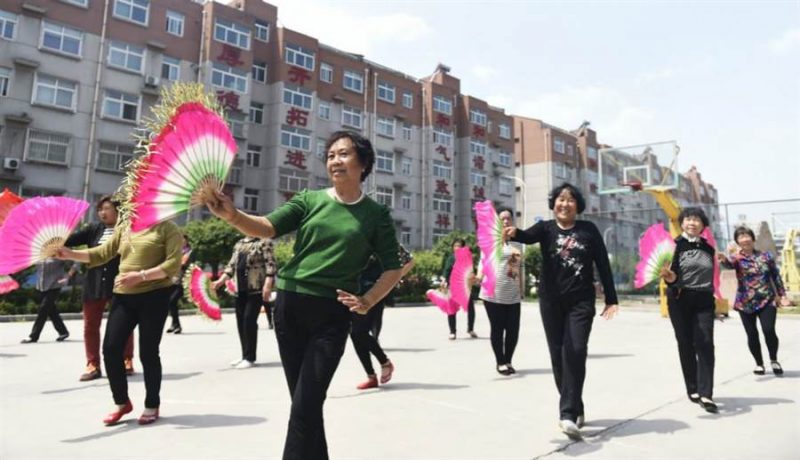
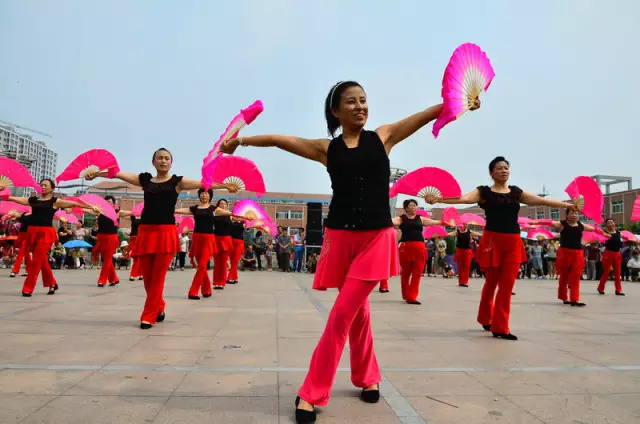
When I walked from school to home at 7 pm everyday in Beijing, I always saw several groups of middle-aged or senior women dance together on the street, square and other public spaces gracefully. They worked very organized with creativity. They are so disciplined –look like professional dance artists. They were so concentrating on what they are doing. I can clearly see an order among them. This is “Square Dance” in China, which becomes a very universal cultural phenomenon in the mainland China especially.

Firstly, Square Dance can be seen as a form of rebelling and feeding back of the elite culture due to its resource and presenting result. As Ranciere said: “These forms define the way in which works of art or performances are ‘involved in politics’, whatever may otherwise be the guiding intentions, artists’ social modes of integration, or the manner in which artistic forms reflect social structures or movements.” The square dance can be seen as a potential politics voice as they create assembly together on the street. The elements of the square dance come from the classical dance and folk dance repertoire/elements from Beijing Dance Academy(BDA), which represents the highest dance education hierarchy and elite dance taste in China. In the country. In the process of urbanization, the indigenous folk dance has disappeared in the urban area for a long time. Square dance people absorbed the dance from BDA, and merge their own understanding, favor and movements, to form a novel ‘folk dance’, which is a rebelling of upper structural culture in my perspective. They simplified the original elite dance with an unspeakable logic, and other laws have been added to form a new and completely different style. For example, they simplify the technique of Silk Belt Dance and reconstruct it into Yangko rhythm to form a novel aesthetics. As a result, sometimes, the elements of square dance are also absorbed by the elite dance education institution. Therefore, there is an interesting wave: when the government is promoting ballet to penetrate the ideology to the grassroots, Square Dance People`s changing elite concert dance elements is a form of agonistic and redefining the power.

Secondly, Square dance make middle-age women to be visible. There are very few people who really watch at Square Dance. Who are they dancing to? If it is just a practice, why do they have clothing requirements occasionally? Why does the managing of dance groups is so organized? I thought that It is more than “just a dance”, it silently calls the idea that “everyone is an artist”. Square Dance is always related to the spectacle, they hope to be seen by society. In the Aesthetics of the Oppressed, Boal states: “Spectacle is not confined to a fifteenth birthday party at which the young woman dances her first waltz with her father, or the dance of the commoner Angelica with the Prince in Visconti’s The Leopard, which opens the doors of nobility to her, or the marriage ceremony of a bride all dressed in white; nor is it only when the president of the Republic lays wreaths on the tomb of the Unknown Soldier, or a new road is officially opened. Spectacle is not just these moments of extravagance and pomp; it also embraces the hearty family Sunday lunch, where people eat and talk according to established rules, as in any piece of theatre. Spectacle has the function of revealing who is who, as if planting a legend on the brow of each protagonist or supernumerary”. These women want to be identified. Today’s China society gradually becomes an individualized society. Even the living conditions of young in the big cities have begun to “atomize”. They have a very high sense of borders and strong self-awareness. However, In the process of the growth of the “square dance generation”, the collective personality was shaped very strongly. Thus, when they retire or are at the age of retirement their focus shifted from family or profession to the blank, they lose the mental support of the relationship of their children’s family and profession, their time-consuming blanks will come out. The ideas of the previous generation and the new generation are almost faulty, and there are very few ways to provide such people with a spiritual world, so they are more willing to find their own sense of presence and importance through collective activities. Most importantly, from a social perspective, these “square dance” people are mainly the 50s and 60s, they have experienced a profound social structural change in their life. Therefore, they need to be in groups, they need their music, they need to stand in the square/stage that everyone can see, remind themselves and others, they can still adapt to today’s society and have not been thrown away. As Ranciere pointed out: “It is a delimitation of spaces and times, of the visible and the invisible, of speech and noise, that simultaneously determines the place and the stakes of politics as a form of experience. Politics revolves around what is seen and what can be said about it, around who has the ability to see and the talent to speak, around the properties of spaces and the possibilities of time”.

Finally, Square Dance is also a form of feminism activism in my opinion. Chinese scholar Zhang Zhaoxuan has summed up the three common experiences of the participants of the square dance: from the individual point of view, these women are mainly the middle-aged or older who have withdrawn or are about to withdraw from the professional field; from the perspective of family life, these women are mainly during the separation for intergenerational relationship and decreasing the expectation of sexual experience and marriage life. In some sense, women are re-establishing their own presence in an open traditional way. The former female sexual identity and even the maternal sexuality are no longer important. They begin to establish a special female social identity.

Can Square Dance be a tool of challenging public order? Chantal Mouffe thinks everything related to politics and is always relevant. Art practice also shows its radical potential to influence social and political connections from the inside. Jacques Rancière redefined the politics and aesthetics by the distribution of sensible—Through the involvement of perceptual images, those invisible people obscured by power can emerge and get more possibilities, thus challenging the original public order. The distribution of sensible is also a division between visible and invisible, arguable and incomprehensible, understandable and incomprehensible. Ranciere suggests that: “Artistic practices are ‘ways of doing and making’ that intervene in the general distribution of ways of doing and making as well as in the relationships they maintain to modes of being and forms of visibility”.

Reference:

Étienne Balibar, “Three Concepts of Politics: Emancipation, Transformation, Civility”
Jacques Rancière, The Politics of Aesthetics
Chantal Mouffe, “What is Agonistic Politics?” and “Agonistic Politics and Artistic Practice”

Augusto Boal, Theatre of the Oppressed

The Performativity of Appearance and Power

        Butler cited and criticized Arendt`s opinion about Action, she revised Arendt`s suggestion about the function of bodies in the politics. Butler demonstrates the meaning and method of assembly. She thinks togetherness is a form of performativity, and precarity is a motivation of gathering.

Arendt said that the plurality of human is the basic situation of action and speech, and it is characterized by equality and difference. Actions and words reveal who someone is and reveal their belongingness—” Speech and action reveal this unique distinctness. Through them, men distinguish themselves instead of being merely distinct; they are the modes in which human beings appear to each other, not indeed as physical objects, but qua men.”

        Arendt concerned, the result of action is irreversible and uncontrollable. So, why do we still need action? Many people regard the essence of politics as ruling. Among the threats brought by totalitarianism, Arendt discovered the value of action. Participating in action is a new beginning, and the disappearance of the action space means the beginning of a totalitarian society. Arendt’s criticism of Marx is based on the distinction between the three concepts of labor, work and action, and points out that replacing the other two concepts in active life with labor is the reason why Marxism has become the cause of totalitarianism.

        In addition to Arendt`s theory, Butler thinks beyond the bodies gathering, speech also performed an important role in the action—”Embodied actions of various kinds signify in ways that are, strictly speaking, neither discursive nor prediscursive. In other words, forms of assembly already signify prior to, and apart from, any particular demands they make. Silent gatherings, including vigils or funerals, often signify in excess of any particular written or vocalized account of what they are about”. She suggests speech and action are both “performance”.How performativity embodied with the notion with people? –“Not everyone can appear in a bodily form, and many of those who cannot appear, who are constrained from appearing or who operate through virtual or digital networks, are also part of “the people,” defined precisely by being constrained from making a specific bodily appearance in public space, which compels us to reconsider the restrictive ways “the public sphere” has been uncritically posited by those who assume full access and rights of appearance on a designated platform“.


Fragments

1.     Ranciere suggests that: “Artistic practices are ‘ways of doing and making’ that intervene in the general distribution of ways of doing and making as well as in the relationships they maintain to modes of being and forms of visibility.” Boal`s theatre practice is actually a revolution of being and the way of making.
2.      “it is possible to challenge a good many imaginary stories about artistic ‘modernity’ and vain debates over the autonomy of art or its submission to politics. The arts only ever lend to projects of domination or emancipation what they are able to lend to them, that is to say, quite simply, what they have in common with them: bodily positions and movements, functions of speech, the parceling out of the visible and the invisible.” Ranciere`s idea about visible and invisible actually can be seen as the relationship between audience and performers.
3.      “The important thing is that the question of the relationship between aesthetics and politics be raised at this level, the level of the sensible delimitation of what is common to the community, the forms of its visibility and of its organization”. In Ranciere`s perspective, the relationship between politics and aesthetics is a form that can be revealed in an artist`s practice. Brecht`s alienation can demonstrates his Marxist inclination.
4.      Mouffe states: “Conflict in liberal democratic societies cannot and should not be eradicated, since the specificity of pluralist democracy is precisely the recognition and legitimation of conflict”. What is the role of arts in the legitimation of conflict? Diana Taylor writes: “Breaking norms is the norm of the performance”.
5.      Mouffe pointed out that Adorno believed in the possibility for art to provide a space for autonomy. While Boal uses practice to certify this point view.
6.      Mouffe suggests that the importance of artistic and cultural practices in the counter-hegemonic struggle. Diana Taylor embodied this perspective more detailly. She thinks performance is an epistemology—“a way of transmitting memory and identity”. The identity certainly contributes to our understanding of the society.
7.      Mouffe pointed out: “Artistic practices can contribute to unsettling the dominant hegemony. The address this issue requires scrutinizing the role of critical artistic practices in the public space”. Placing a piece out of its familiar context can be seen as an act of intervention to dominant power.
8.      Mouffe said: “Envisaged as counter-hegemonic interventions, critical artist practices can contribute to the creation of a multiplicity of sites where the dominant hegemony can be questioned.” The dominant hegemony can be seen as a repetitive framework. Thus, the function of the artist is as Diana Taylor`s written: “Performance is not limited to mimetic repetition. It also includes the possibility of change, critique, and creativity with frameworks of repetition”. 9. Question about tragedy: Boal points that: “transforms itself to docile Mimicry. In Tragedy, the physical violence is carried out off-stage”. We may can understand this way, the climax of theatre/play need to approach extreme. This is why we can see, great love stories always end with death. Does the climax of tragedy can also be seen as a rebel to the hegemony? 10. Brecht talking about the relationship between art and science “in the age to come art will create entertainment from that new productivity which can so greatly improve our maintenance” amusement centre of class. Theatre can show the structure of society. Actually, it may depends on who is the audience. In the traditional theatre, performers seem have great statues, but spectators are the people who can be a critic and own the power of arts.


Empathy and Power

Aristotle’s theory of tragedy has greatly influenced the theory of Western theatre. Brecht and Boal made a radical revolution in Aristotle’s theory. Aristotle thought the meaning of tragedy is entertaining people. As the representation of human behavior, in Poetics, Aristotle defines tragedy as a mode of imitation, to inspire ‘pity and fear’ between the spectator and characters. While Brecht argued Aristotle’s idea about ‘purification’ and ‘pity and fear’. Through stating A-effects, Brecht hope audience can be critical and rational when viewing the character, and also performer can keep a distance from the role he played — ‘At no moment must he go so far as to be wholly transformed into the character played’. Furthermore, contrary to Aristotle`s idea of Greek tragedy, Boal thinks Empathy is dangerous—’When rational foundations of physical acts are not there, Empathy turns into a relationship of pure irrational animality’. Boal states ‘when rational foundations of physical acts are not there, Empathy turns into a relationship of pure irrational animality’–In Hollywood super-hero movie, Empathy may potentially lead the audience to emerge a fascism inclination. Boal have already broke barrier between the performers and actors to create a new notion of theatre and decomposed the original power order in the theatre. For me, the idea of Boal inspired me to reconsider what is theatre? Is it presenting a work as art products or is it activism? Maybe the answer can be found in Taylor`s Performance. ‘Breaking norms is the norm of performance’. Performance allows us to see, experience and examine the power structure of society. Thus, theatre gets rid of the framework of mimetic repetition, it becomes a possibility of chance, a methodology of critics. 

Attached Video: Audience-performer co-working process in arts creation. Contact Improvisation was largely used in community dance and dance therapy. Also, Music therapy use a similar structure of composing.

I have a little confuse about Boal`s opinion about spectacle. As Boal thinks: “Spectacle is not confined to a fifteenth birthday party at which the young woman dances her first waltz with her father, or the dance of the commoner Angelica with the Prince in Visconti’s The Leopard, which opens the doors of nobility to her, or the marriage ceremony of a bride all dressed in white; nor is it only when the president of the Republic lays wreaths on the tomb of the Unknown Soldier, or a new road is officially opened. Spectacle is not just these moments of extravagance and pomp; it also embraces the hearty family Sunday lunch, where people eat and talk according to established rules, as in any piece of theatre. Spectacle has the function of revealing who is who, as if planting a legend on the brow of each protagonist or supernumerary.” He potentially agree with spectacle in some way. I would like bring dance artist Yvonne Rainer`s No Menifesto here for the discussion of politics hehind “spectacle”: As Rainer wrote here, the first and foremost of her artist idea is to anti spectacle.

No to spectacle.
No to virtuosity.
No to transformations and magic and make-believe.
No to the glamour and transcendency of the star image.
No to the heroic.
No to the anti-heroic.
No to trash imagery.
No to involvement
of performer or spectator.
No to style.
No to camp.
No to seduction of spectator by the wiles of the performer.
No to eccentricity.
No to moving or being moved.

What is the definition of “spectacle”? Does the “spectacle” potentially lead the inclination to fascism?