The articles this week focus on the changing landscape of political spectacle from analog to digital. As technology and the internet continues to develop methods of sharing information has changed what we think of as a nation state. Poster explains, the conditions of a globalized internet has made citizenship obsolete because the internet is a borderless place (72). Universality then becomes inherent in what we would consider citizenship or netizenship as individuals navigate political relations on a decentralized internet. As the Recombinant Theatre and Digital Resistance article explains, digital culture has been reworked as a “invasion of mass media that functions as a reproduction and distribution network for the ideology of capital” (151). In comparing analog to the digital, Critical Arts Ensemble explains, the analogic model created a sense of assuredness about the order of the world whereas the digital model has created a fragmented understanding of phenomena which has disrupted everyday communication to embrace a technology based worldview (152).
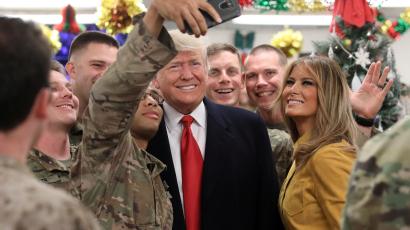
This technological shift can be seen in the way Donald Trump has run his reality television show and presidency. As the internet and social media has taken over and the chase for online “friends” becomes a political act, Trump’s style of entertainment and administration American has transformed popular culture and US politics (Edwards, 27). Edwards explains, whereas as previous politicians maintained the analogic, Trump’s rhetoric emerges through the digital, communicating style through reality television and online tweets. Steaming from The Apprentice boardroom we see how the entertainment of “You’re Fired!” has shifted its aim from celebrities to political cabinet members (33); moreover, the benefit for Trump (and perhaps a pitfall for the American people) is that incorporating social media views and likes reduces any engagement of civic matters down to a popularity contest.
Edwards, B. (2019). Trump from reality tv to twitter; or the Selfie-Determination of nations, Project Muse. 74 (3): 25–45.
Poster, M. (2006). Information Please: Culture and Politics in the Age of Digital Machines. Duke University Press.
“Recombinant Theatre and Digital Resistance.” (2000). Critical Art Ensemble. 44 (4): 151–66.