The readings for this week analyze how the use of digital media has become a tool of action for politicians and different groups, as well as a way to rethink the idea of citizenship. Edwards (2018) states that the rise in the use of technology and media have not also been a means for open expression, but they have also contributed to the raise of nationalism as new forms of identification developed with different technologies. An example of this is in Trump’s interventions and appearances as a resemblance of American reality shows; “The global circulation of Donald Trump’s rhetoric and persona beginning with the 2015 campaign ruptured a crucial divide between popular culture and political discourse and under Trump US political system itself has become a form of global entertainment.” (27) The author calls “the selfie determination of nations” where real people, bots and trolls coexist, while performance on Twitter creates an fake intimacy. In Trump’s case the use of Twitter played an important role in his political spectacle. Here, the manipulation of the victims, for example, is a way to reproduce spectacle or “the political theater” (36).
For Poster (2006), this rise of digital media complicates our notion of citizenship. For the author, citizen and natural rights are constructed from a West perspective where “Human rights and citizenship are tied together, but in here we can ask, based on what ideas of humanity are those rights constructed? Here, Poster introduces the idea of the “netizen” for the political subject constituted in the internet (78) that has become a new cultural practice of resignification while also enhancing existing political formations. In here, the net is also used for political figures to take advantage but the net also contains its own forms of hierarchy and control; “many forms of political presence characteristic of the nation-state are reproduced.” (83).
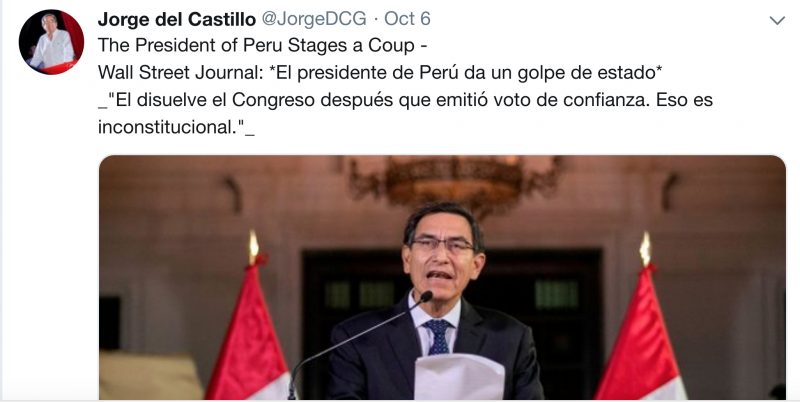
An example of these ideas are seen in what in Peru is called “Cortina de humo” and that started during Fujimori’s dictatorship where media characters like Laura Bozo were utilized to distract audiences and contribute with the spectacularization of the country, while real human rights crimes were been committed. These mechanisms last until today where Twitter is used by fujimoristas to create and spread fake news and terror. This was lately observed with the idea of the “golpe de estado”. Fortunately, there is a section of groups that resist these mechanisms using the same tools.